Ask an air compliance manager where last quarter's filing almost failed, and the answer is rarely the report template. It is usually late contractor data two days before an EPA submission, a methane inventory that does not match between facilities, a site approval sitting in someone's inbox, or supporting evidence nobody can find once the auditor asks for it.
Those failures look different on the surface. Underneath, they are the same problem: the reporting process is disconnected from the operational systems, reviews, and evidence that make a number defensible. Environmental reporting software exists to connect that process. It brings operational and environmental data, calculations, validation, approvals, report generation, and audit evidence into a workflow that can be repeated under deadline pressure.
This guide covers what the category is, how the Environmental Reporting Lifecycle Framework works, how reporting software differs from adjacent tools, which capabilities matter once the demo is over, and how industrial buyers should pressure-test platforms before they shortlist vendors.
At a glance
- What it is: Software that connects environmental data, calculations, workflows, approvals, and evidence into accurate, repeatable reporting processes.
- What it is not: A document generator, a generic ESG disclosure tool, or a substitute for every compliance or EHS workflow.
- Who needs it: Environmental, air compliance, emissions, and regulatory reporting teams managing multi-facility or multi-program reporting under audit pressure.
- How to choose: Evaluate the full Environmental Reporting Lifecycle Framework from source data through submission and evidence retention, not only the final report template.
The Environmental Reporting Lifecycle Framework
If you watch a reporting cycle from the inside, the work does not start when someone opens a template. It starts weeks earlier, when production extracts, monitoring files, lab results, and contractor workbooks begin arriving on different schedules.
The Environmental Reporting Lifecycle Framework is a way to name that sequence so buyers can evaluate software against the real path from source systems to regulators, assurance providers, or corporate consumers of the report. The stages in between are where filings usually succeed or fail.
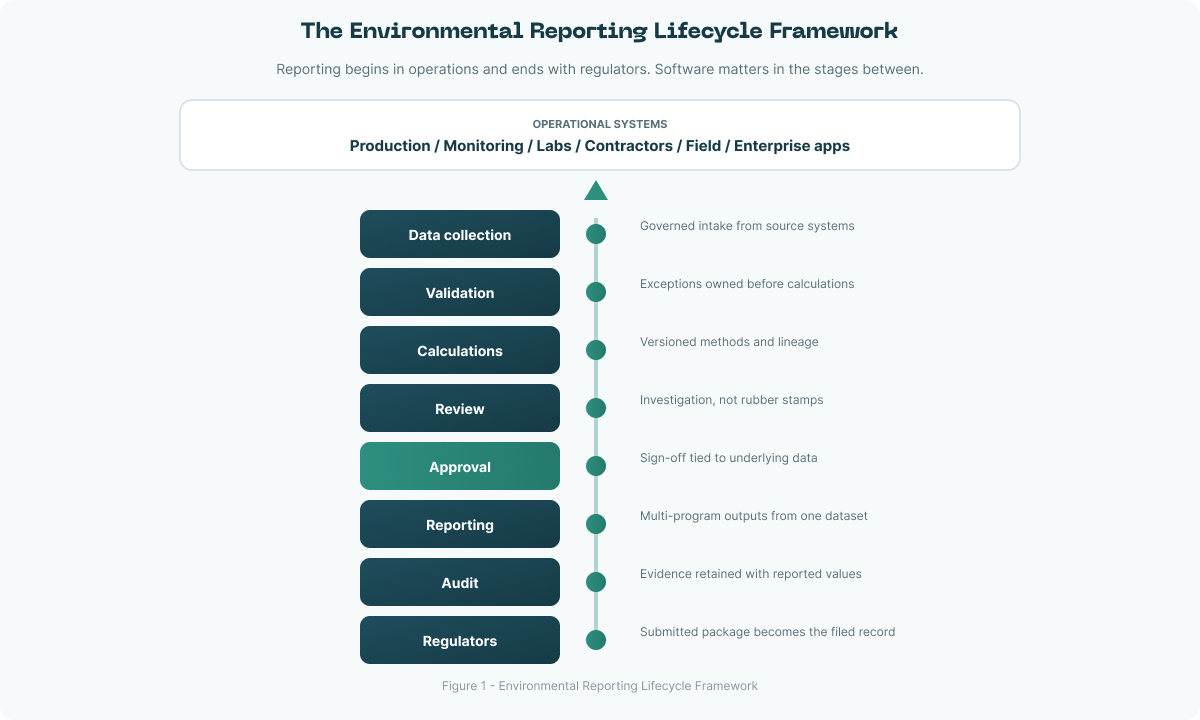
Figure 1: The Environmental Reporting Lifecycle Framework. Use this model to evaluate software, compare categories, and pressure-test vendors.
|
Stage |
What happens |
|---|---|
|
Operational systems |
Production, monitoring, labs, contractors, field inspections, and enterprise apps create source data |
|
Data collection |
Inputs are gathered into a controlled reporting environment |
|
Validation |
Missing, late, conflicting, or out-of-range data is flagged and owned |
|
Calculations |
Approved methods convert inputs into reportable values |
|
Review |
Qualified reviewers investigate exceptions and confirm assumptions |
|
Approval |
Formal sign-off is captured against the underlying dataset |
|
Reporting |
Regulatory, operational, and corporate outputs are generated from governed data |
|
Audit |
Evidence, lineage, and version history remain available after filing |
|
Regulators |
Packages are submitted and retained as the filed record |
A polished PDF can hide a weak middle. As shown in the Environmental Reporting Lifecycle Framework, software earns its keep between collection and approval: when contractor data is late, when two facilities calculate methane differently, or when a reviewer needs the source record behind an outlier. Templates alone do not solve that.
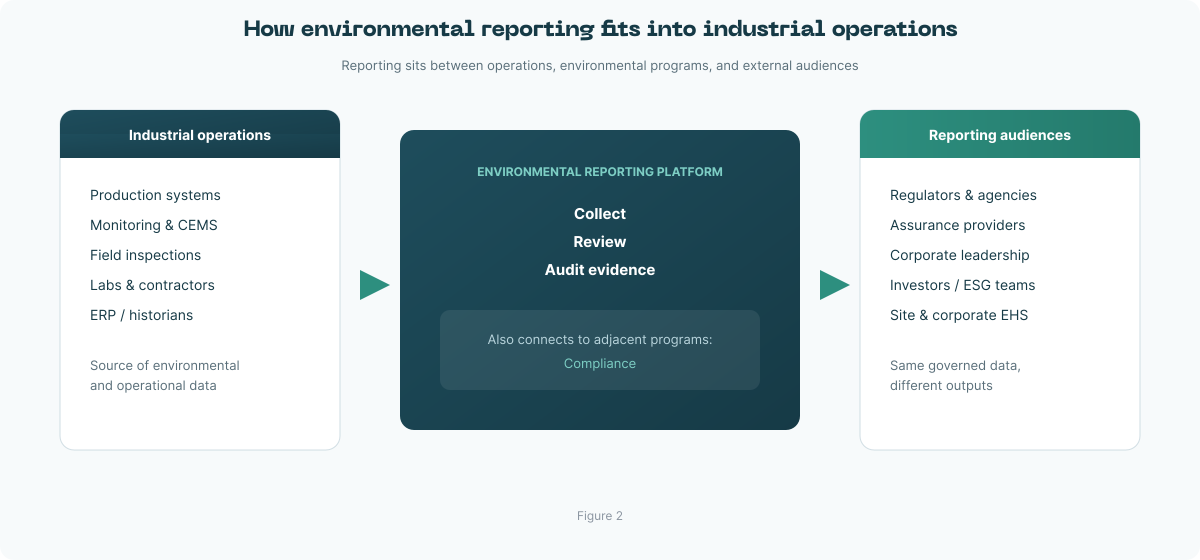
Figure 2: Where environmental reporting sits in industrial operations. Reporting connects field and operational systems to environmental program work and external reporting audiences.
What is environmental reporting software?
Environmental reporting software helps organizations collect, validate, calculate, review, approve, generate, and retain the information required for environmental reports across facilities, assets, and teams.
Definition
Environmental reporting software: Software that governs the lifecycle of environmental reporting by connecting operational data, validation, calculations, approvals, reporting, and audit evidence into a repeatable process.
The useful definition is broader than “software that creates reports.” A report is an output. The software’s job is to govern the Environmental Reporting Lifecycle Framework that produces that output in a way that can be repeated, reviewed, and defended.
In industrial settings, environmental reporting typically spans three overlapping audiences and outputs:
|
Reporting type |
Primary audience |
Typical outputs |
|---|---|---|
|
Regulatory reporting |
Regulators and agencies |
Facility inventories, air reports, GHG submissions, permit-related filings |
|
Operational reporting |
Site and corporate environmental teams |
Status, exceptions, overdue reviews, data quality issues, investigation queues |
|
Corporate reporting |
Leadership, investors, assurance providers |
Aggregated GHG inventories, sustainability disclosures, assurance packages |
Different audiences need different views of the same underlying information. Regulatory submissions need defensible methodology and evidence. Operational reports need exception visibility before deadlines slip. Corporate disclosures need governed rollups that do not invent a second set of numbers.
Strong environmental reporting software connects those outputs to one governed workflow rather than forcing teams to rebuild the same data path for every template. Compare that approach with environmental compliance software, emissions management software, and broader EHS management software when the shortlist starts mixing categories.
Environmental reporting software vs. a reporting spreadsheet
Spreadsheets remain useful for analysis and ad hoc checks. They become fragile when they are the system of record for recurring regulatory submissions, multi-site rollups, or audit evidence. Version control, approval history, methodology lineage, and exception routing are difficult to preserve in uncontrolled files.
Environmental reporting software does not need to eliminate every spreadsheet. It needs to stop critical reporting processes from depending on them.
Characteristics of modern environmental reporting software
A surprising number of “new” reporting tools still recreate the old operating model: people export files, paste values, chase approvals over email, and hope the evidence folder is complete when someone asks. The product interface changed. The scramble did not.
|
Traditional reporting |
Modern reporting |
|---|---|
|
Spreadsheets as the system of record |
Connected platform as the system of record |
|
Manual collection and re-keying |
Automated integrations and governed intake |
|
Static calculations in local files |
Governed calculation engine with version history |
|
Email approvals and unsigned PDFs |
Workflow approvals tied to underlying data |
|
Evidence stored in local folders |
Audit evidence retained with the reported values |
|
Annual or quarterly scramble |
Continuous readiness across the reporting cycle |
|
One template per program, rebuilt each time |
Multi-program outputs from a governed dataset |
|
“Who changed this?” answered by memory |
Traceable ownership, timestamps, and methodology lineage |
Traditional reporting can still produce a filing. Modern reporting produces a filing you can still explain six months later, when the assurance provider asks why Facility A and Facility B used different assumptions for the same equipment class.
If a platform only digitizes the old scramble, it is not modern environmental reporting software. It is a shared drive with better formatting.
Why environmental reporting has become more complex
Talk to teams running multi-site programs and you hear the same pattern: no single regulation created the burden. The burden comes from facilities, systems, methods, and review expectations interacting at the same time.
Multiple facilities and uneven operating conditions
A compressor station, processing plant, refinery unit, pipeline segment, and generation asset rarely share the same permit mix, monitoring cadence, or data owners. Corporate still wants comparable status across the portfolio. Sites still need workflows that match local conditions. Force every location into one identical path and people invent side processes in spreadsheets by the second reporting cycle.
Changing regulatory and voluntary expectations
U.S. operators managing greenhouse gas inventories under the EPA Greenhouse Gas Reporting Program face defined calculation, recordkeeping, and reporting logic by source category. Canadian operators track federal and provincial methane and emissions requirements through guidance maintained by Environment and Climate Change Canada. Voluntary programs such as OGMP 2.0 and corporate inventories aligned to the GHG Protocol add another layer of methodology and evidence expectations.
Requirements are not the hard part by themselves. The hard part is that methods, applicability, and formats keep changing while source systems and ownership models stay fragmented.
Fragmented systems and rising data volumes
Environmental numbers often begin in production systems, historians, continuous monitors, labs, contractor files, field inspections, and enterprise applications. Add more sensors and measurement programs and the volume rises faster than the reconciliation process can absorb it. Without governed intake and validation, reporting weeks turn into scavenger hunts.
Calculation complexity and audit expectations
Plenty of filings stumble for reasons that look like calculation problems but are really control problems: missing factors, stale equipment inventories, undocumented overrides, methodology versions nobody can reconstruct. Auditors and assurance providers increasingly ask how a number was produced, who reviewed it, and what evidence supports it. ISO 14001 is useful here as a conceptual reference: environmental management depends on controlled processes and retained records, not only final outputs.
Voluntary disclosures layered on regulatory work
Corporate sustainability reporting often draws from the same emissions and operational data used for regulatory filings. Split those paths into separate tools and you usually get two inventories and a quiet argument about which total is “real.” One governed dataset with clear methodology boundaries is the cleaner pattern.
Reporting gets harder wherever multi-facility operations, fragmented source systems, calculation lineage, and audit expectations collide. Software helps when it governs that collision. Formatting the final table does not.
Benefits of environmental reporting software
Feature pages promise efficiency and visibility. The benefits worth paying for show up in four places during a real reporting cycle.
Better data quality
When intake and validation are governed, a missing contractor workbook or an out-of-range meter read shows up before calculations lock. That is the difference between fixing a gap on Tuesday and discovering it at 4 p.m. on filing day.
Faster reporting cycles
Cycles get faster when handoffs stop living in email threads and shared-folder archaeology. Exception routing, calculation runs, and package assembly move earlier in the week. Reviewers still review. They just spend less time hunting for the file that should have been there already.
Stronger audit readiness
Audit readiness is not a binder assembled after the fact. It is whether source data, methodology versions, reviews, approvals, and attachments travel with the reported values. Reconstructing last year’s number should feel like retrieval, not a forensic project.
More confidence in reported numbers
Confidence comes from lineage. If a reviewer can open a reported value and see the inputs, method, exceptions, and sign-off behind it, leadership and assurance providers inherit that same defensibility. A dashboard total without that path is only a picture.
None of those outcomes arrive from templates alone. Without validation, lineage, and approvals, a nicer interface mainly relocates the same scramble.
How environmental reporting software works
Strip away the product marketing and most platforms claim some version of the Environmental Reporting Lifecycle Framework: collect, validate, calculate, review, approve, report, retain evidence, submit. The difference is whether those stages hold when the inputs are incomplete and the deadline is real.
1. Collect
Collection is where reporting either starts clean or starts behind. The job is to bring environmental and operational inputs into a controlled environment from the systems and people that create them.
On the ground, that means late contractor workbooks, incomplete facility inventories, duplicate meter reads, and site identifiers that do not match across systems. Integrations, scheduled imports, and clear ownership for missing inputs matter more here than another blank form.
2. Validate
Validation exists so bad inputs do not silently become reportable values. Missing, late, out-of-range, or conflicting data should surface early enough that someone can still fix them.
The common failure mode is familiar: exceptions appear two days before filing, nobody owns the queue, and “good enough” becomes whatever gets the package out the door. Software helps when rules, owners, and escalation paths are explicit.
3. Calculate
Calculations apply approved methodologies, factors, engineering estimates, or measurement-based methods. Buyers should care less about a black-box engine that returns a total and more about whether Facility A and Facility B can drift onto different versions of the same method without anyone noticing.
Ask vendors to show methodology changes, override controls, and lineage from inputs to outputs. For emissions-specific depth, see the emissions management software buyer's guide and nine criteria for evaluating emissions software in oil and gas.
4. Review
Review is where an anomaly should become an investigation, not a rubber stamp. Reviewers need drill-down to source records, and comments belong in the reporting package rather than an email thread that disappears after filing week.
5. Approve
Approvals should confirm the underlying dataset, not only a PDF export. Bottlenecks show up when the one person who can sign is unavailable, or when site-then-corporate routing cannot be configured without a services project. Configurable routing, timestamps, and retained identity of approvers are the basics.
6. Generate reports
Report generation should pull from governed data into regulatory templates, operational status views, and corporate rollups. Manual copy-paste into agency formats is where transcription errors and unreproducible packages usually reappear.
7. Maintain audit evidence
Evidence work is not a postscript. Source data, methodologies, reviews, approvals, and attachments need to travel with the values. If reconstructing a prior-period package means hunting unlabeled folders, the audit trail was never really in the system.
8. Submit
Submission is the final handoff to an agency, assurance provider, or internal consumer. Expect format issues and incomplete attachments if the earlier stages were weak. Retain the filed version and the status of what went out. Do not expect “automatic filing with every regulator.” Verify the pathways your programs actually use.
If a platform only shines at report generation, it is solving the last mile. The production value sits earlier in the Environmental Reporting Lifecycle Framework.
Explore Validere's regulatory air and GHG reporting approach →
Key capabilities to evaluate in environmental reporting software
Vendor feature lists converge quickly: dashboards, workflows, reporting, integrations. Production fit shows up elsewhere. What happens when contractor data is two days late? Can you see why two facilities calculated the same source category differently? Can you reconstruct last year’s approved value without opening five shared drives?
The capabilities below are the ones that usually separate demos from filing weeks. For adjacent capability depth in compliance buying, pair this section with top environmental compliance software features.
Data integration
Reporting software should connect to the systems that already hold source data rather than asking teams to re-key everything. Ask about SCADA or production extracts, monitoring technologies, lab results, contractor uploads, ERP references, and enterprise data stores. Weak integration is how spreadsheet reconciliation returns after go-live.
Workflow automation
Automate the handoffs that burn calendar days: intake checks, exception assignment, escalation, package assembly. Be suspicious of automation that hides exceptions or rushes approvals without context. A useful demo question: show what happens when data is incomplete two days before a deadline.
Calculation transparency
Dashboards impress in demos. Lineage survives audits. Reviewers and auditors need methods, factors, assumptions, overrides, and version history. If the platform cannot explain a reported number, the organization inherits that opacity.
Data validation
Validation should catch completeness, range, consistency, and timing issues before review cycles begin. A queue nobody owns is only a prettier backlog.
Approval workflows
Match the way the organization actually signs off: site then corporate, specialist then environmental manager, or another control combination. Rigid one-path approvals create workarounds. Overly loose approvals create audit risk.
Audit trails and version history
Who changed what? When was a calculation recalculated? Which report version was approved, and with which evidence package? For regulated industrial reporting, version history is part of the product, not an add-on.
Reporting templates and multi-program outputs
Most industrial teams need regulatory templates, operational status views, and corporate aggregates from related data. Check whether one governed dataset can support those outputs without inventing a second inventory. Keep methodology boundaries clear where voluntary disclosure sits beside regulatory work.
Dashboards
Useful dashboards show missing data, unresolved exceptions, approval status, and deadline risk. Less useful dashboards mainly display polished totals with no next step. Buyers still overvalue the visual layer.
AI-assisted workflows
AI can help with anomaly detection, data mapping assistance, document retrieval, and draft narrative support when it runs on governed data with human review. Treat unsupervised compliance decisions and vague “AI reporting” claims carefully. Ask what the model can see, what it can change, and where a person must still approve the result.
Security and scalability
Expect role-based access, authentication controls, audit logging, and IT-aligned standards. Scalability means more facilities, programs, data frequency, and users without redesigning the process every year. Ask for architecture evidence, not slogans.
|
Capability |
What to verify in a demo |
|---|---|
|
Integration |
Live or realistic connection path from a source system you actually use |
|
Validation |
Exception creation, ownership, and resolution before filing |
|
Calculations |
Methodology versioning, override controls, and lineage |
|
Approvals |
Multi-step routing with retained identity and timestamps |
|
Evidence |
Reconstruction of a prior-period reported value |
|
Reporting |
Regeneration after a correction without losing history |
|
AI assists |
Human review controls and data permissions |
|
Scale |
Multi-site ownership and program expansion without spreadsheet side-paths |
Environmental reporting software vs other software categories
Procurement shortlists often mix ESG, EMS, environmental reporting, compliance, emissions, and EHS as if the labels are interchangeable. They are related. They are not the same job. That mix-up is how teams buy a disclosure platform and discover, mid-implementation, that facility-level calculations and approval trails were never the product’s center of gravity.
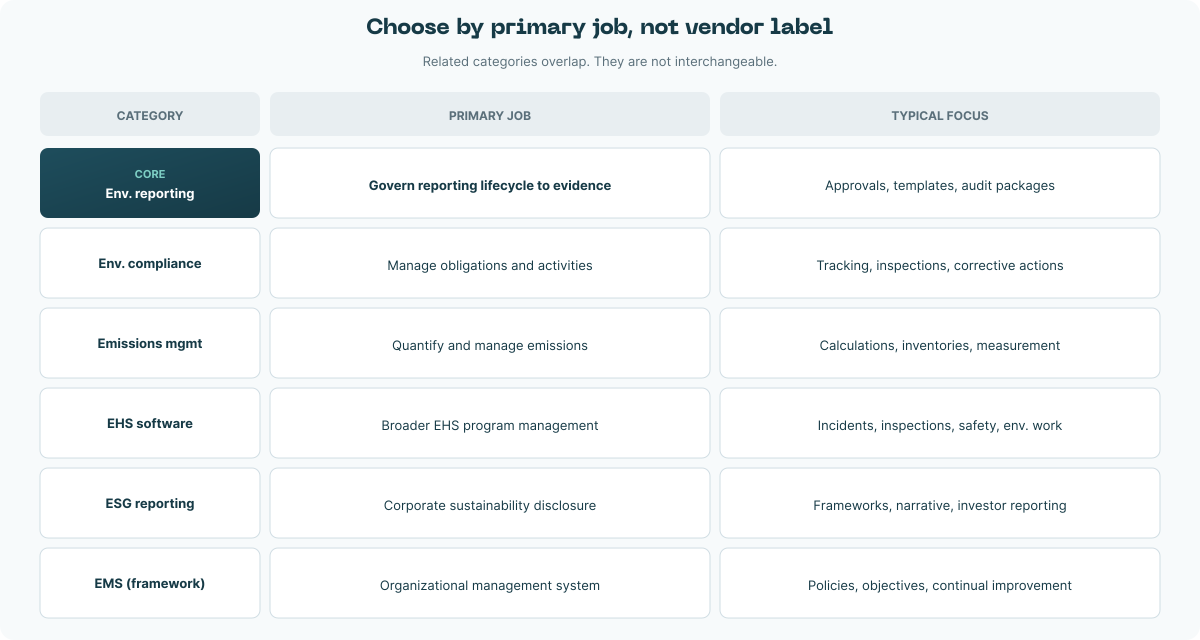
Figure 3: Category comparison by primary job. Start with the work you need done, then shortlist platforms that can support adjacent requirements without forcing the wrong category to carry the load.
|
Category |
Primary job |
Typical strength |
Common limitation if used alone for reporting |
|---|---|---|---|
|
Environmental reporting software |
Govern reporting lifecycle from data to evidence |
Approvals, templates, audit packages, repeatable submissions |
May need deeper field or emissions workflows from adjacent systems |
|
Environmental compliance software |
Manage obligations, activities, tracking, and evidence |
Obligation tracking, inspections, corrective actions |
Reporting may be one module rather than the core design |
|
Emissions management software |
Quantify and manage emissions data and related actions |
Source-level calculations, inventories, measurement response |
May be narrower than full multi-media environmental reporting |
|
EHS software |
Manage environmental, health, and safety programs |
Incidents, inspections, safety, broader EHS workflows |
Environmental reporting depth varies widely by platform |
|
ESG reporting software |
Assemble corporate sustainability disclosures |
Framework mapping, narrative disclosure, investor reporting |
Often weak on facility-level industrial calculations and operational evidence |
|
Environmental management systems (EMS) |
Organizational management framework |
Policies, objectives, continual improvement (e.g., ISO 14001 concepts) |
An EMS is not itself a software category |
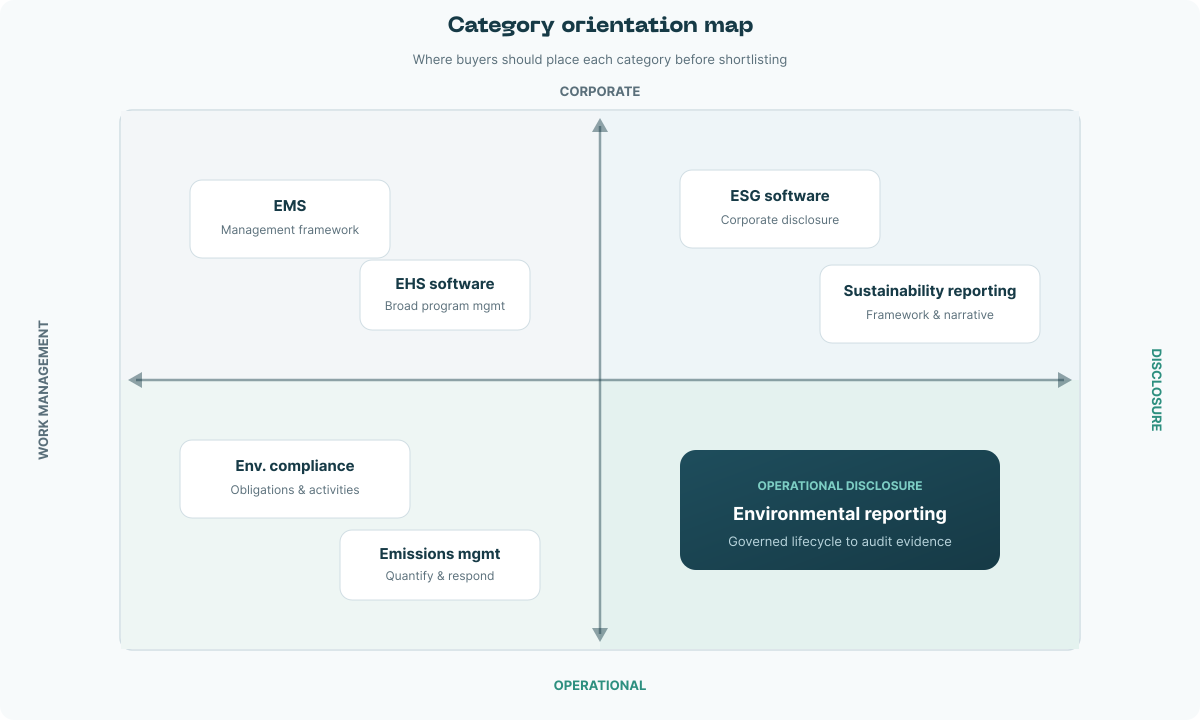
Figure 4: Category orientation map. Corporate versus operational on one axis, work management versus disclosure on the other. Environmental reporting sits in operational disclosure: governed outputs with facility-level evidence.
Environmental reporting software vs ESG software
Environmental reporting software and ESG reporting software are not the same.
Environmental reporting software is built around operational and regulatory reporting workflows: source data, calculations, site reviews, approvals, and evidence. ESG reporting software is typically built around corporate disclosure: framework alignment, narrative compilation, and stakeholder reporting across environmental, social, and governance topics.
Industrial organizations often need both capabilities over time. The mistake is assuming an ESG disclosure platform can replace facility-level environmental reporting, or that a regulatory reporting workflow automatically satisfies every sustainability disclosure need.
ESG software is a wider decision space. Environmental reporting is a distinct problem space: governed operational reporting workflows with facility-level evidence. Buyers evaluating both should keep the categories separate rather than treating reporting as a narrower version of ESG disclosure.
Environmental reporting software vs environmental compliance software
Compliance software focuses on managing obligations and the activities required to meet them. Reporting software focuses on producing governed reports from validated data and retained evidence. Many platforms claim both. Buyers should test whether the product is stronger at obligation tracking, reporting lifecycle control, or both.
A useful pressure test: if the team’s pain is missed inspections, unclear permit obligations, and open corrective actions, start with compliance evaluation. If the pain is late inventories, fragile calculation lineage, approval bottlenecks, and weak audit packages, start with reporting evaluation. Use how to choose environmental compliance software when obligation management is the larger buying problem.
Environmental reporting software vs emissions management software
Emissions management software concentrates on quantification, inventories, measurement response, and emissions program workflows. Environmental reporting software may cover emissions reports plus other environmental media and multi-program reporting packages. In oil and gas and midstream environments, the categories often intersect heavily.
Evaluate whether your bottleneck is source-level emissions integrity, multi-program report governance, or both. For calculation and measurement depth, see the emissions management software buyer's guide. For oil and gas demo criteria, see nine ways to evaluate emissions management software.
Environmental reporting software vs EHS software
EHS platforms span environmental, health, and safety. Some include strong environmental reporting modules. Others are primarily incident, inspection, and safety systems with limited calculation and regulatory reporting depth. Do not assume “EHS software” means industrial environmental reporting is covered.
Ask whether the EHS platform can reconstruct a reported environmental value from source data through methodology, review, and approval. If that path is weak, the organization may still need dedicated reporting capability beside the broader EHS system. For multi-site operating-model questions, see EHS management software for multi-site energy operators.
Environmental reporting software vs an EMS
An environmental management system is a management framework. Software can support an EMS by helping teams run controlled processes and retain records. Buying software does not create an EMS, and implementing ISO-aligned processes does not automatically solve reporting workflow gaps.
Match the category to the primary job first, then check adjacency. Category confusion remains one of the fastest ways to waste a shortlist cycle.
Who uses environmental reporting software?
Look at who is awake during filing week. That is usually the core user group: environmental managers, air compliance managers, emissions specialists, and regulatory reporting managers. EHS directors, environmental engineers, sustainability managers, operations excellence leaders, and digital transformation leaders often sit in the buying committee even when they are not the ones assembling the package.
Environmental teams define workflow requirements. Operations and IT decide whether integrations are realistic. Leadership cares whether the next deadline and the next audit will be less chaotic than the last ones.
Industries
A few concrete examples make the work tangible:
- Oil and gas: Monthly or periodic emissions inventories across wells, facilities, and corporate rollups, often with methane program requirements layered on top.
- Midstream: Compressor stations, processing, and pipeline-related reporting where ownership is dispersed and contractor data arrives late or incomplete.
- Refining: Permit-driven air calculations, monitoring inputs, and recurring agency submissions with tight review controls.
- Utilities: Air permit reporting and portfolio-level environmental outputs across generation or distribution assets with mixed operating conditions.
- Chemicals: Multi-media reporting where calculation assumptions and approvals are tightly controlled.
- Manufacturing: Waste, air, and broader environmental compliance reporting across plants that do not share identical permits or source systems.
- Mining: Multi-site environmental reporting where corporate governance has to coexist with local operating realities.
Validere’s strongest fit is with asset-heavy industrial operators in energy and adjacent sectors. Broader industries use environmental reporting software as well, but evaluation criteria should still be grounded in regulated operational workflows rather than generic corporate sustainability narratives.
LDAR and fugitive emissions programs often feed reporting packages even when they are purchased as a distinct workflow. When inspection-to-repair records matter to filings, see the LDAR software buyer's guide.
Common environmental reporting software implementation challenges
Most implementations do not fail because the software cannot generate a report. They fail because the organization moves templates into a new system and leaves the messy parts (ownership, exceptions, evidence, integrations) outside it.
Manual spreadsheets as the unofficial system of record
Teams migrate the filing templates, then keep reconciling and approving in spreadsheets “just for this cycle.” Two cycles later, the dual process is the process.
Disconnected systems
If source systems stay outside the reporting path, users re-key data and reintroduce transcription risk. Integration planning belongs in selection, not as a surprise after go-live.
Data quality without ownership
Validation rules fail when nobody owns exceptions. Facilities disagree on what “complete” means for a package, and the queue becomes decorative.
Ownership confusion between site and corporate teams
Corporate wants consistency. Sites need room for local permits and operating conditions. Ignore that tension and shadow processes appear quickly.
Late reporting and approval bottlenecks
Late inputs compress review windows. Approvals that depend on one unavailable person create deadline risk. Test escalation and delegation before you buy.
Changing regulations after go-live
Methods, applicability, and templates change. If every update requires a heavy services project, the license price understates the real cost.
Underestimated training and operating rhythm
Even strong platforms underperform when users do not know who owns exceptions, how corrections work after a package is generated, or what “approved” means in the system. Train against the filing calendar, not only the navigation menu. The first two reporting cycles usually tell you whether the rhythm will hold.
Ownership, integration, exception handling, and change management have to be designed with the software. Doing that work afterward is how implementations quietly recreate the old scramble.
How to evaluate environmental reporting software
Do not evaluate environmental reporting software by watching a polished tour of happy-path data. Evaluate it against the Environmental Reporting Lifecycle Framework your team already runs when contractor files are late and approvals are contested.
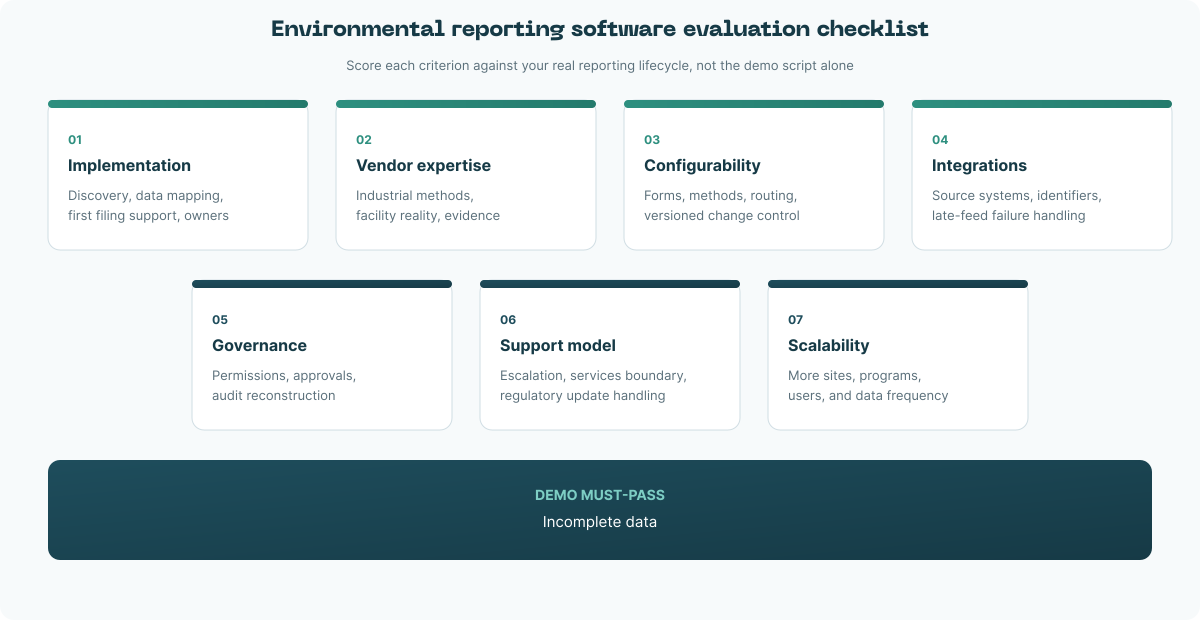
Figure 5: Evaluation checklist. Score platforms against workflow reality, not brochure categories.
1. Implementation approach
Ask how the vendor sequences discovery, data mapping, calculation configuration, workflow design, user rollout, and first filing support. Clarify what customer teams must own. Implementations fail when everyone assumes someone else will clean the data model.
2. Vendor expertise
Industrial reporting requires more than generic software experience. Look for evidence that the vendor understands facility structures, environmental calculation methods, regulatory package expectations, and the difference between demo data and messy production inputs.
3. Configurability
Your organization will need to adapt forms, calculations, routing, permissions, and templates as programs change. Configurability should not mean uncontrolled local customization that destroys comparability. Ask who can change standards, how changes are versioned, and whether sites can vary within guardrails.
4. Integrations
Map the systems that matter: production and operational databases, monitoring technologies, EHS tools, ERP references, data lakes or warehouses, and document repositories. Ask vendors to show the path for your systems, including failure handling when feeds are late. Review Validere’s public platform and integrations materials as one example of how vendors describe architecture, then require the same specificity from every shortlist candidate.
5. Governance
Governance includes permissions, approval controls, methodology ownership, audit trails, and the ability to reconstruct prior reports. If governance is weak, reporting speed increases risk rather than reducing it.
6. Support and operating model
Clarify support hours, escalation paths, services boundaries, and how regulatory updates are handled. Also clarify whether the vendor expects heavy ongoing services to keep reports current.
7. Future scalability
Score the platform on adding facilities, users, programs, and higher-frequency data without reinventing the workflow. A system that works for five sites and collapses at fifty is not a platform. It is a temporary project.
What “good enough” looks like before shortlisting
Before you invite demos, you should be able to answer:
- which reports and programs are in scope for year one
- which source systems and contractors feed those reports
- who validates, reviews, and approves today
- where the last filing cycle broke down
- what evidence an auditor would ask for first
If those answers are unclear, vendor demos will fill the vacuum with polished assumptions. Requirements clarity is part of evaluation, not a separate project that starts after selection.
Practical demo script
Ask every vendor to run the same scenario:
- Import or connect incomplete source data for multiple facilities.
- Surface validation exceptions and assign owners.
- Calculate using a documented method, then change one factor and show version impact.
- Route review and approval with comments.
- Generate a report package and show supporting evidence.
- Correct a value after approval and regenerate while preserving history.
- Reconstruct a prior-period reported number from retained records.
The vendor that handles exceptions, corrections, and evidence cleanly usually outperforms the vendor with the polishiest dashboard.
Questions to ask environmental reporting software vendors
Evaluation criteria tell you what to score. These questions tell you what to force into the demo. Ask every shortlisted vendor to show the work, not describe it.
- Show me how a prior report can be recreated. Can the platform reconstruct a filed value from source data, methodology version, reviews, approvals, and evidence?
- Show me what happens when data arrives late. Two days before a deadline, which exceptions appear, who owns them, and how does escalation work?
- Show me methodology version history. If a factor or method changes mid-cycle, what is versioned, what is recalculated, and what remains locked?
- Show me approvals. Who can approve, can routing match site-then-corporate controls, and is the approval tied to the dataset or only to a PDF?
- Show me how exceptions are managed. Are missing, conflicting, and out-of-range values owned, commented, and retained in the record?
- Show me audit evidence. Can an auditor follow one reported number to supporting documents without leaving the system for a shared drive scavenger hunt?
- Show me a correction after approval. After a value is approved, how is a correction made, re-approved, and regenerated without losing history?
- Show me multi-program outputs from the same governed data. Can regulatory, operational, and corporate views reuse the same underlying information without inventing a second inventory?
If a vendor cannot demonstrate those scenarios with realistic industrial data, the platform is unlikely to survive filing week.
Request a demo → after you have mapped your Environmental Reporting Lifecycle Framework and evaluation criteria.
How Validere approaches environmental reporting
Validere treats environmental reporting as a governed industrial workflow, not a document factory.
That usually means connecting operational and environmental data, supporting calculations and review processes, and preserving audit-ready traceability for regulatory and related reporting outputs. Teams move away from fragmented source systems and spreadsheet-dependent reconciliations toward a repeatable path from intake to submission-ready packages.
Validere commonly supports this work by:
- connecting environmental reporting to operational source systems rather than requiring organizations to replace every system they already run
- supporting governed reporting workflows across collection, validation, calculation, review, and approval
- helping teams automate repeatable calculation and review steps while keeping methodology and sign-off visible
- preserving lineage and evidence so reported values can be investigated and defended
- fitting beside existing enterprise and EHS systems where full replacement is unnecessary
For buyers evaluating reporting as part of a broader air and GHG program, see regulatory air and GHG reporting, emissions management, and voluntary emissions reporting. When obligation tracking and field workflows sit beside reporting, review environmental compliance as well.
Validere does not claim to file automatically with every regulator, support every framework out of the box, or eliminate every manual step. The useful question is whether the platform can support the Environmental Reporting Lifecycle Framework with enough transparency, integration, and control to survive filing week and the audit that follows it.
See how Validere supports environmental reporting workflows →
Choosing the right environmental reporting software
If there is one buying rule worth keeping, it is this: prefer the platform that can run the Environmental Reporting Lifecycle Framework under messy conditions, not the one with the cleanest demo dashboard.
Category labels will keep overlapping. An ESG tool, an EHS suite, and a compliance system may all claim reporting. Ask whether they can handle late contractor data, methodology version drift between facilities, delayed site approvals, and evidence reconstruction after the filing leaves the building. Those are the moments that reveal fit.
Organizations that invest in governed reporting processes usually get better data quality and less last-minute risk, and they adapt more cleanly when regulatory or voluntary requirements change. Shortlist the vendors that can demonstrate incomplete data handling, methodology versioning, approvals, corrections, and evidence reconstruction with scenarios that look like your last difficult filing cycle.
Keep adjacent systems where they still own a distinct job. Just do not ask a disclosure platform, or a broad EHS module, to quietly carry facility-level reporting work it was never designed to govern.
Key takeaways
Key takeaways
- Environmental reporting succeeds or fails as a workflow, not as a formatting exercise.
- Strong reporting depends on governed data, transparent calculations, and controlled approvals.
- Environmental reporting software is different from ESG, EHS, and compliance software.
- Evaluate vendors using real reporting scenarios rather than feature checklists.
- Choose software that supports the Environmental Reporting Lifecycle Framework from data collection through audit evidence.
Frequently asked questions
What is environmental reporting software?
Environmental reporting software governs the lifecycle of environmental reporting by connecting operational data, validation, calculations, approvals, reporting, and audit evidence into a repeatable process. It is designed around the Environmental Reporting Lifecycle Framework, not only around formatting a final document.
What does environmental reporting software do?
It helps teams collect and validate source data, apply calculations, route reviews and approvals, generate regulatory and operational reports, retain supporting evidence, and prepare submission-ready packages across facilities and programs.
Is environmental reporting software the same as ESG software?
No. Environmental reporting software focuses on operational and regulatory reporting workflows. ESG software typically focuses on corporate sustainability disclosure across environmental, social, and governance topics. Industrial organizations may need capabilities from both, but they solve different primary jobs.
How does environmental reporting software work?
It generally follows the Environmental Reporting Lifecycle Framework: collect data, validate inputs, calculate results, review exceptions, approve outputs, generate reports, retain audit evidence, and submit packages. Platforms differ in how well each stage holds up under incomplete data and deadline pressure.
Can environmental reporting software automate regulatory reporting?
It can automate parts of the process, such as intake checks, calculation runs, review routing, package assembly, and controlled regeneration after corrections. Full automation of every regulatory filing pathway is uncommon. Buyers should verify the specific programs and submission formats they need.
How much does environmental reporting software cost?
Pricing usually depends on facilities or assets in scope, modules, user counts, integration complexity, services, and support. Total cost of ownership also includes configuration, change management, and ongoing maintenance of calculations and workflows. Compare quotes against the workflow being replaced, not license line items alone.
Can environmental reporting software replace spreadsheets?
It can replace spreadsheets as the system of record for recurring reporting, approvals, and evidence retention. Teams may still use spreadsheets for analysis. The goal is to stop critical reporting processes from depending on uncontrolled files.
Can it integrate with ERP systems?
Many platforms can integrate with ERP and other enterprise systems, either directly or through data pipelines. Integration quality varies. Ask vendors to demonstrate the specific systems, identifiers, and failure-handling behavior your reporting process requires.
What industries use environmental reporting software?
It is used across oil and gas, midstream, refining, utilities, chemicals, mining, manufacturing, and other regulated industrial operations where environmental reports must be produced repeatedly and defended under audit.
How is environmental reporting software different from environmental compliance software?
Compliance software centers on managing obligations and related activities. Reporting software centers on governing the path from data to submitted reports and retained evidence. Some platforms cover both; buyers should test which job the product actually performs well.
What features matter most in environmental reporting software?
The features that usually matter most are data integration, validation and exception handling, calculation transparency, approval workflows, audit trails and version history, multi-program reporting from governed data, security, and the ability to scale across facilities without recreating spreadsheet side-paths.
What should industrial companies ask before buying environmental reporting software?
Ask what happens when source data is missing before a deadline, how methodology changes are versioned, how approvals and evidence are retained, which systems can be integrated, and whether a prior-period reported value can be reconstructed during an audit. Those questions reveal production fit faster than a generic product tour.