Environmental compliance software has moved beyond storing permits and reports. For industrial teams, the harder problem is connecting the work behind compliance: operational data, calculations, inspections, investigations, approvals, regulatory reporting, and the evidence behind each reported value.
That work often crosses spreadsheets, legacy applications, EHS systems, operational databases, consultants, and email. Two products with similar feature lists can perform very differently once data is missing, a methodology changes, or a previously approved value needs to be corrected.
This guide is the evaluation framework for industrial and oil and gas teams choosing environmental compliance software. For Validere's product approach, see environmental compliance software. For capability depth once criteria are set, use Top 7 Environmental Compliance Software Features.
Exception path to test early: Ask every shortlisted vendor to show what happens when a source record is missing, a calculation method changes, and an approved value needs to be corrected. The proof of concept section later turns that into a bounded test.
At a glance
- What it is: Software that helps industrial organizations manage environmental obligations, emissions and regulatory processes, operational handoffs, reporting, and audit evidence across facilities and teams.
- Who needs it: Operators where compliance work spans field data, operational systems, calculations, reviews, and multiple reporting programs.
- How to evaluate it: Map requirements and workflows first, score vendors against the 11 criteria below, then test shortlisted products against realistic data, exceptions, approvals, and corrections.
- What this page is not: A vendor ranking, a full EHS suite guide, or a deep emissions-feature explainer. Those jobs belong to the cluster articles in Related resources.
Download: Environmental Compliance Software Evaluation Kit → : Requirements worksheet, vendor demo brief, POC test plan, and scoring matrix.
How do you choose environmental compliance software?
Choose environmental compliance software by mapping the environmental, emissions, regulatory, and operational workflows your organization must execute, then scoring products against workflow fit, emissions support, EHS and environmental process coverage, regulatory automation, field-to-report connectivity, integrations, audit evidence, configurability, exception management, implementation readiness, and measurable operational value. Shortlist only vendors that can demonstrate those workflows with realistic data, exceptions, approvals, and corrections.
A long feature list tells you much less than seeing whether the product can execute your actual workflows from source data and field activity to reporting and audit evidence.
What is industrial environmental compliance software?
Industrial environmental compliance software is technology used to manage and coordinate the environmental work industrial organizations must perform across facilities, assets, teams, and reporting programs. The category can include capabilities associated with environmental management systems, EHS platforms, emissions management software, regulatory reporting software, permit and obligation management, inspection and corrective-action workflows, environmental data and evidence management, and workflow automation and integrations.
Those labels overlap. Buyers should evaluate software based on the workflows they need to execute rather than the category name alone.
Traditional systems of record primarily store data and documents. More useful products also coordinate work, automate calculations and handoffs, surface exceptions, maintain evidence, and support decisions. AI belongs in that second category when it helps people find problems, summarize context, or accelerate review inside a governed process. It does not belong there when it is pitched as unsupervised compliance.
That does not mean one product must replace every existing system. Many industrial organizations keep ERP, EAM, historian, laboratory, and established EHS investments in place and still need a stronger connected layer for environmental, emissions, and regulatory workflows.
|
Category |
Primary purpose |
Typical focus |
|---|---|---|
|
Environmental compliance software |
Manage environmental requirements and related workflows |
Obligations, environmental data, tracking, reporting, and evidence |
|
Environmental management software |
Broader environmental program management |
Compliance plus water, waste, permits, inspections, risk, and related program work |
|
EHS software |
Manage broader environmental, health, and safety programs |
Incidents, inspections, safety programs, risk, and environmental activities |
|
Emissions management software |
Manage emissions data and associated processes |
Measurement, quantification, calculations, inventories, and reporting |
|
Environmental management system (EMS) |
Provide an organizational management framework |
Policies, objectives, processes, responsibilities, and continual improvement |
Environmental compliance software vs. environmental management software
Environmental compliance software and environmental management software are often used interchangeably, but they do not always describe the same scope.
Environmental compliance software is typically focused on managing environmental obligations, regulatory data, workflows, reporting, and evidence. Environmental management software is often a broader label that may include compliance capabilities plus additional environmental program management, such as water, waste, permits, inspections, risk, and sustainability reporting.
An environmental management system (EMS) is different again. ISO 14001 defines requirements for an organizational management framework, including policies, objectives, processes, responsibilities, and continual improvement. Software can support an EMS, but the system itself is not a software category.
EHS software is broader still: it typically covers environment, health, and safety together, including incidents, occupational safety, training, risk, and often environmental modules. Oil and gas teams comparing full EHS platforms will find the definition and the shortlist in Top EHS Software for Energy and Oil & Gas.
For buyers, the practical question is not which label a vendor uses. It is whether the product supports the environmental work your organization must perform, and whether that work is primarily compliance reporting, broader environmental program management, emissions quantification, or a combination. Deeper capability and emissions criteria live in Related resources when you need them.
Who needs this software?
This category is most valuable when compliance work spans multiple systems, people, facilities, and reporting programs.
Organizations that typically benefit include oil and gas producers and midstream operators managing methane, air, and GHG reporting across dispersed assets; refineries and petrochemical facilities with permit-driven monitoring and recurring submissions; utilities managing emissions, water, and waste obligations; and multi-site industrial operators standardizing environmental reporting and evidence.
Teams managing a small number of straightforward requirements may not need a dedicated product. Once the work depends on field data, operational systems, calculations, reviews, and audit evidence, spreadsheet-and-email processes often become the bottleneck. At that point, the buying decision depends less on individual features and more on whether the software can support the full compliance process.
The workflow your software should support
Before comparing modules, picture the path environmental work actually takes:
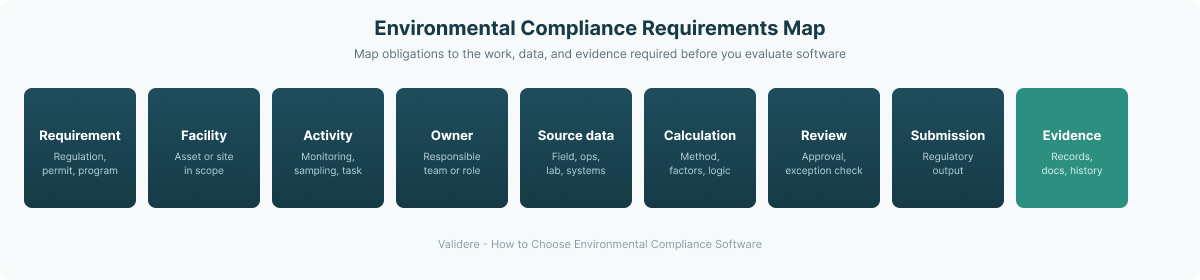
Figure 1: The connected environmental compliance workflow. Software earns its place when it keeps this path intact.
That is the workflow your software should support. If a product only stores the final report, or only digitizes the field form, the hard work still happens in email and Excel between the stages. During every demo, ask the vendor to show one obligation moving through as much of this path as possible.
Map requirements before you evaluate vendors
Software evaluation should begin before the first vendor demonstration. Start by documenting what the organization is responsible for managing today. Requirements may vary by jurisdiction, facility, asset, environmental medium, permit, or reporting program.
At a minimum, map applicable regulations and permits; facilities and assets in scope; pollutants and media; monitoring, sampling, and inspection requirements; calculation methodologies; recurring reporting and deadlines; responsible owners; review and approval requirements; and recordkeeping and evidence needs.
You do not need an exhaustive legal register during software selection. You need a clear view of the types of work the software must support. Under the U.S. EPA Greenhouse Gas Reporting Program, including Subpart W for petroleum and natural gas systems, a reporting output often depends on facility applicability, source categories, calculation methods, missing-data procedures, and recordkeeping, not just a final number. Operators with Canadian assets should also account for federal and provincial methane expectations, including Canada's oil and gas methane guidance.
A useful requirements map connects:
Requirement → facility or asset → required activity → responsible owner → source data → calculation or methodology → review → submission → supporting evidence
If a prospective product cannot support the important links in that chain, teams usually recreate them through spreadsheets, email, and manual work outside the system.
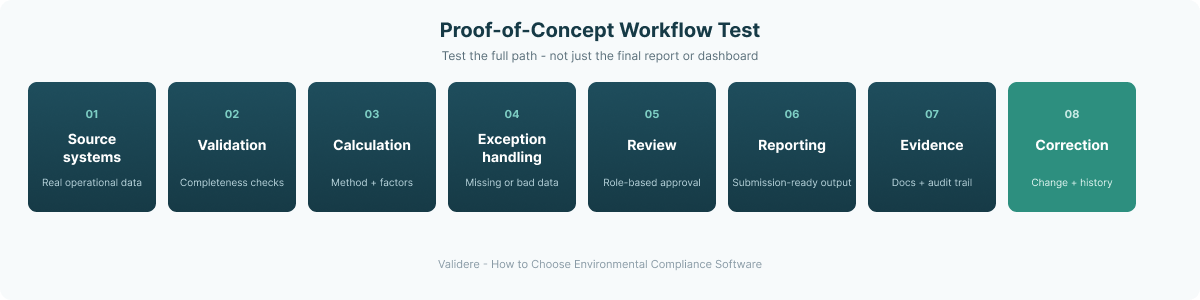
Figure 2: Environmental compliance requirements map. Map each obligation to the work, data, and evidence required before evaluating software.
Map current data and workflows
Once requirements are understood, map how the work actually happens. The documented process and the real process are not always the same.
A procedure may say that environmental data is reviewed monthly. In practice, the process may involve downloading files from multiple systems, updating a spreadsheet, emailing a facility for missing information, correcting a formula, and manually transferring the result into a reporting template. Those details matter during software selection.
Environmental teams may depend on field inspections, mobile capture, continuous monitoring, laboratory results, production accounting, SCADA and historians, ERP and EAM systems, existing EHS tools, asset databases, and spreadsheets. Create a basic map of how data enters, who checks it, what happens when it is incomplete, where calculations and corrections happen, who approves results, where evidence lives, and whether a reported value can be traced back through the process.
Most teams discover that the gap is the work required to make data usable before it reaches a dashboard or report. Look specifically for repeated manual entry, spreadsheet consolidation, email approvals, duplicate records, missing or late data, inconsistent methods, manual report preparation, unclear ownership, disconnected field and office processes, weak change history, and difficulty reconstructing evidence.
Diagnose those operating failures before you build a vendor scorecard. See 9 workflow bottlenecks that create industrial compliance risk.
These breakdowns are especially common in oil and gas and midstream operations, where production data, field measurements, and regulatory calculations must reconcile before a single reported value is defensible. A demonstration built around perfectly prepared sample data can show what the software looks like when everything goes right. Environmental teams also need to understand what happens when data is late, a methodology changes, an inspection identifies a problem, or a previously approved value needs to be corrected.
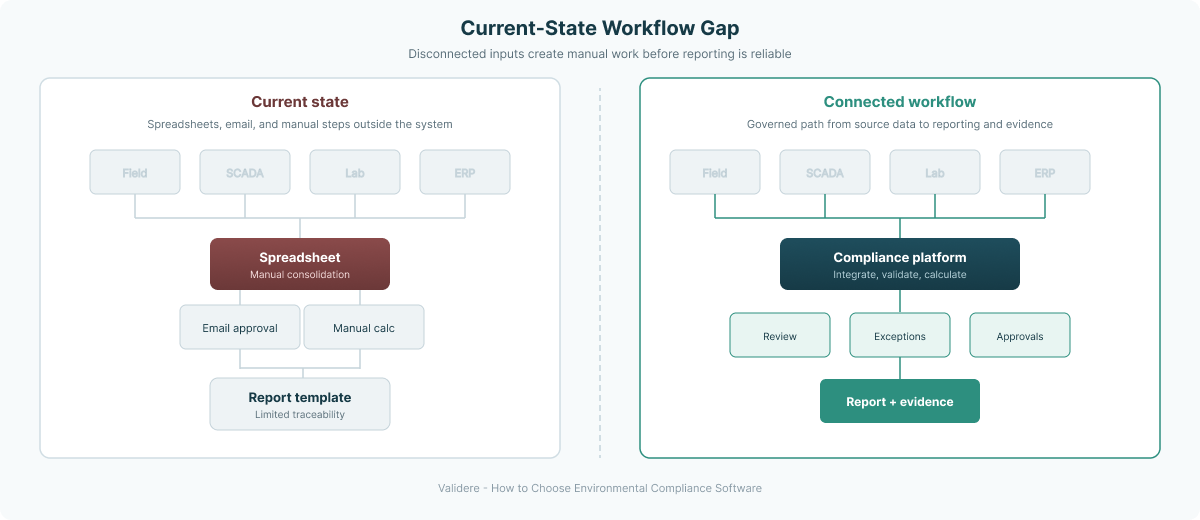
Figure 3: Current-state workflow gap. The software problem is often the work required before data reaches a dashboard or report.
11 criteria for evaluating environmental compliance software
Once requirements and current workflows are understood, use these eleven criteria to structure demos and proofs of concept. Weight them based on your environment. Not every criterion matters equally for every buyer. Capability depth for production operations is covered in the features guide; this section is about how to score vendors during procurement.
1. Fit for your environmental and regulatory workflows
Begin with the work your teams actually perform: air compliance, emissions inventories, inspections, permit obligations, incident follow-up, regulatory submissions, and audit preparation. A product may have broad environmental functionality and still need significant configuration for your programs and operating model.
In practice, workflow fit is usually a stronger predictor of implementation success than the length of a vendor's feature list.
Buyer questions:
- Which workflows must the product support from beginning to end?
- Where do delays, manual handoffs, or data-quality risks occur today?
Watch for: Every requirement described as either "out of the box" or "fully configurable" without a clear explanation of what those terms mean in practice.
2. Support for emissions management
If emissions inventories, source-level calculations, reconciliation, or regulatory emissions reporting are material workloads, evaluate emissions data collection, calculation methodologies, source-level traceability, inventory management, review, reconciliation, and reporting. Do not treat a corporate GHG total as proof of operational depth. Factor sources and calculation references need to stay inspectable; the EPA's AP-42 emissions factors are a useful reminder of why those references cannot be buried. When emissions quantification is the primary buying decision, use the dedicated emissions management software buyer's guide. How carbon accounting and emissions management differ as jobs is in carbon accounting vs emissions management.
Buyer questions:
- Can users inspect how an emissions value was produced and which methodology applied?
- How are methodologies and factors versioned when requirements change?
3. EHS and environmental process coverage
Some organizations need broad EHS functionality. Others need deeper environmental and emissions capabilities. Buyers should distinguish between broad module coverage and actual workflow depth. A long safety-and-environment module list does not prove the product can support your permit calculations, emissions reconciliation, or evidence chain.
Buyer questions:
- Which EHS processes are in scope for this purchase, and which remain elsewhere?
- Where does the vendor demonstrate depth versus a labeled module?
4. Regulatory workflow automation
Strong automation covers recurring obligations, assignments, deadlines, approvals, notifications, escalation paths, submission preparation, and evidence retention. Automation should reduce repetitive coordination without removing human review or accountability. A calendar of due dates is not enough if the task sits apart from the environmental data and evidence.
One question every industrial buyer should ask explicitly: How much of our work will still happen in Excel after go-live? If the honest answer is "most of the consolidation, calculation checks, and evidence packing," you are buying a system of record with a new front end, not a connected workflow.
Buyer questions:
- Can recurring work be scheduled and owned by facility or requirement?
- What happens when work is overdue, reassigned, or needs attached evidence before approval?
- How much of our current Excel-based consolidation and reconciliation remains after implementation?
5. Field-to-report workflow connectivity
Information should move from inspections, field observations, monitoring systems, laboratories, and operational systems into technical review and regulatory reporting without repeated re-entry, broken handoffs, or version-control gaps. Digitizing a form is not the goal. Keeping the field record available for corrective actions, calculations, reporting, and future audits is.
Buyer questions:
- How does a field finding become a reviewed, reportable, and auditable record?
- Where does re-keying or parallel spreadsheet work still occur?
6. Data integration and interoperability
Industrial organizations should not have to replace every existing technology investment to modernize environmental workflows. Evaluate practical connections to ERP, EAM, and EHS systems, sensors, operational databases, spreadsheets, laboratory data, and third-party monitoring systems. An integrations marketing page is not architecture proof.
Buyer questions:
- How would the product connect to our priority systems, and who maintains those connections after launch?
- How are missing, malformed, or duplicate records handled?
7. Data quality, traceability, and audit evidence
Producing a final number is not enough if the organization cannot show how it was produced. Cover lineage, calculation transparency, approval history, source documents, change logs, version control, and defensible evidence. An audit log that shows a user changed a value is weaker than a process that shows origin, transformation, methodology, supporting evidence, and approvals. What has to travel with a reported emissions number for review is covered in emissions assurance and verification in oil and gas. The EPA's Audit Policy is a useful reminder that compliance programs depend on discovering, documenting, and correcting issues. Software should support that trail; it cannot replace the judgment behind it.
Buyer questions:
- Can a reviewer trace a reported value to its original source and methodology version?
- Can historical reporting states be reconstructed after corrections?
8. Configurability for site and jurisdictional complexity
Facilities, assets, operating regions, permits, calculation methods, organizational structures, and regulatory programs differ. Buyers need controlled configuration and governance, not vague claims about unlimited flexibility. Corporate standards should stay consistent while site execution reflects local permits, assets, and obligations.
Buyer questions:
- Can different facilities follow different workflows under common governance?
- What can administrators change without a services project, and how is that change documented?
9. Exception management and decision support
Teams need to identify missing data, anomalies, overdue actions, threshold risks, inconsistent calculations, and emerging compliance issues. This is where software moves from storing information to helping people execute work. AI can help surface issues, summarize context, or accelerate review when it is embedded in the workflow. It should not imply fully autonomous compliance decisions. Human accountability remains part of a defensible process. Where AI helps versus rules-based automation is in AI for environmental compliance.
Buyer questions:
- What happens when expected data does not arrive or a value looks wrong?
- What can any AI capability access, how are outputs validated, and where does human review occur?
10. Implementation and adoption
Software value depends on implementation quality and adoption, not feature count alone. Cover data migration, workflow design, integrations, training, governance, phased deployment, and ownership after launch. If every new report, facility, workflow, or methodology change requires a services engagement, understand that operating model before buying.
Buyer questions:
- What internal resources are required, and who owns the system after go-live?
- What must be true in our data and workflows before a phased deployment succeeds?
11. Measurable operational value
Define success before selection. Useful measures include time saved, reduced manual work, faster reporting cycles, lower consultant dependency, improved audit readiness, fewer broken handoffs, and better visibility across facilities. Do not accept generic efficiency claims without tying them to the workflows you mapped earlier.
Buyer questions:
- Which manual steps, delays, or evidence gaps should improve after implementation?
- How will we know within the first operating cycle whether the purchase is working?
Environmental compliance software comparison table
Use this table while scoring demos. Keep each cell concrete and tied to your mapped workflows.
|
Evaluation area |
What to look for |
Warning sign |
|---|---|---|
|
Workflow fit |
End-to-end support for your priority environmental and regulatory processes |
Feature labels with no demonstrated path from activity to evidence |
|
Emissions capabilities |
Source-level data, methodology transparency, inventory review, and reconciliation |
A corporate GHG total treated as proof of operational depth |
|
Regulatory automation |
Owned obligations, deadlines, escalations, approvals, and retained evidence |
A due-date calendar disconnected from data and submissions |
|
Integrations |
Practical connections to operational, laboratory, ERP/EAM, and field systems |
An integrations page treated as architecture proof |
|
Auditability |
Traceable lineage from reported value to source, method, evidence, and approval |
Activity logs without reconstructable reporting history |
|
Configurability |
Controlled site and jurisdictional variation under corporate governance |
"Fully configurable" with no admin-owned change path |
|
Implementation |
Clear migration, integration, training, and post-launch ownership |
Every change after go-live requires a services engagement |
|
Reporting and analytics |
Source-to-submission workflows, not dashboard exports alone |
Polished outputs that still depend on offline spreadsheet prep |
|
AI and decision support |
Issue surfacing, summarization, and accelerated review with human accountability |
Chatbot demos presented as autonomous compliance |
|
Operational value |
Measurable reduction in manual handoffs, cycle time, or audit scramble |
Efficiency claims with no link to your mapped workflows |
How should oil and gas companies evaluate environmental compliance software?
Oil and gas teams should apply the framework above to the workflows generic software tours often miss: methane and GHG inventories, air compliance, LDAR follow-up, permit-specific calculations, multi-facility reporting, contractor inputs, and regulator requests under time pressure.
What usually changes for oil and gas:
- Source-level emissions data and changing regulatory programs sit beside permit obligations, not in a separate evaluation.
- Field and corporate teams share the same evidence trail, including contractor and consultant inputs.
- Existing ERP, EAM, EHS, historian, laboratory, and operational systems will not all be replaced, so integration and ownership matter as much as modules.
- The proof of concept should include missing records, methodology changes, corrections after approval, and multi-facility consolidation, not only a clean demo dataset.
If the purchase sits inside a broader EHS program, keep this page as the environmental compliance evaluation hub. For vendor shortlisting across full EHS suites, see Top EHS Software for Energy and Oil & Gas.
Test a real compliance workflow before buying
For high-impact software decisions, a bounded proof of concept can reveal more than a series of generic demonstrations. You do not need to recreate the entire environmental program before signing a contract. Select a representative workflow that tests the capabilities most important to the decision.
The fastest way to expose a weak platform is still the exception path: a missing source record, a calculation method change, and a correction to an approved value. Test with realistic source data, a calculation or transformation, an exception, review and approval, a reporting output, supporting evidence, and that intentional correction. Judge whether the product preserves context and traceability throughout the process, not whether it can produce a polished final dashboard or report.
|
Test element |
What to include |
|---|---|
|
Multiple data sources |
Data from the systems and formats your team actually uses |
|
A calculation or transformation |
How the product applies and explains the relevant methodology |
|
A field or operational activity |
The people responsible for creating or collecting part of the information |
|
An exception |
Missing, late, duplicate, or unexpected data |
|
Review and approval |
The actual roles involved in the process |
|
A reporting output |
Something the environmental team genuinely uses |
|
Supporting evidence |
Relevant documentation attached and retrieved |
|
An intentional correction |
A change to an approved value and how the product handles the revision |
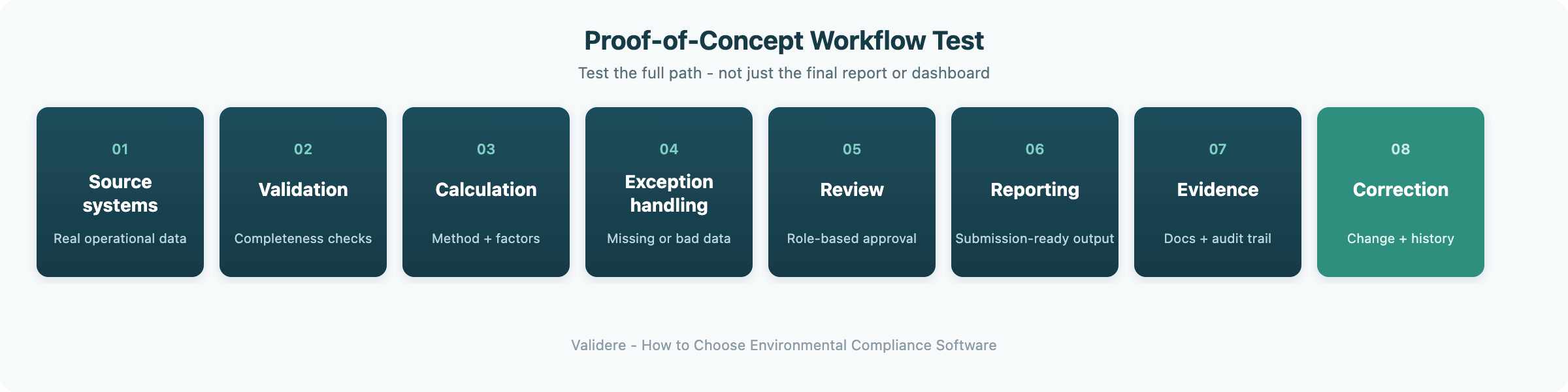
Figure 4: Proof-of-concept workflow test. Evaluate the complete path, not just the final report or dashboard.
The final output matters, but so does the path to produce it. A product that performs well only after the data has been manually prepared outside the system may shift work rather than reduce it.
Implementation, ownership, and total cost
Software selection does not end when the contract is signed. Before choosing a product, understand what is required to move from the current environment to a working production system: requirements validation, data migration, integrations, workflow and calculation setup, permissions, testing, training, and change management.
One of the most important questions is simple: who owns the system after implementation? If every new report, facility, workflow, or methodology change requires a services engagement, understand that operating model before buying.
Confirm deployment model, data residency, field connectivity, authentication, security documentation, and tenant isolation early. On-premise or private-cloud deployment may still be required in some environments.
Subscription price is only one component of cost. Compare licensing, implementation services, integration build and maintenance, configuration, training, internal administration, support, regulatory updates, and expansion. A lower initial software price can become less attractive if Excel and email remain the real operating system around it.
Demos, scorecards, and common mistakes
A software demonstration should test your requirements, not follow the vendor's standard tour. Give vendors a written scenario brief 48–72 hours in advance, including one real requirement, one data source, and one exception. If every answer is "yes, the product can do that," ask them to show the process.
Use a scorecard with weightings set before final demos. The comparison table above is the lightweight version. The full scoring matrix, demo brief, and POC plan live in the Evaluation Kit.
The mistakes that waste the most time are familiar: starting with demos before requirements; comparing feature lists instead of workflows; judging polished reports without testing lineage; treating integrations as a checkbox; testing only the happy path; assuming "configurable" means self-configurable; ignoring post-launch ownership; and evaluating AI through a chatbot demonstration rather than a governed workflow task.
Choosing software around the work that needs to be done
The best environmental compliance software for one organization may be a poor fit for another. Start with your requirements, not a universal software ranking. Map the work and the data. Identify where the current process breaks down. Score products against the eleven criteria above, test exceptions, and confirm that reported values can be traced to their sources. Be clear about who will own the system after launch, then decide using criteria established before the sales process begins.
Digitizing an existing compliance process is not enough. The better outcome is a more connected and reliable path from environmental data and activity to decisions, reporting, and evidence.
How Validere fits
Validere is designed for environmental work that does not live neatly inside one system. It connects operational data, environmental calculations, reviews, exceptions, reporting, and supporting evidence while working alongside systems such as ERP, EAM, historians, and existing EHS tools.
That makes it most relevant when the problem is not simply storing compliance records, but reducing the manual work between source data, technical review, regulatory reporting, and the evidence needed to explain the result later.
Validere is not a generic enterprise EHS suite, a simple dashboard, a carbon accounting tool, a replacement for every existing enterprise system, or an autonomous compliance platform. How carbon accounting and emissions management differ as jobs is in carbon accounting vs emissions management.
If your biggest challenge is coordinating environmental work across multiple systems, teams, and reporting processes rather than replacing existing technology, Validere is designed for exactly that problem. Explore environmental compliance software, emissions management software, and regulatory air and GHG reporting, or request a demo.
Frequently asked questions
What is environmental compliance software?
Environmental compliance software helps industrial organizations manage environmental obligations, inspections, corrective actions, permits and evidence, and related reporting workflows in one governed process. The strongest value usually comes from connecting field activity, operational data, reviews, and submissions so teams are not reconstructing the record at filing or audit time.
What is the difference between EHS software and environmental compliance software?
Environmental compliance software focuses on environmental obligations, reporting, permits, emissions-adjacent processes, and environmental evidence. EHS software is broader: it typically includes environmental work alongside health and safety capabilities such as incident management, occupational safety, training, and risk management. Many products combine both. Organizations with dense environmental or emissions workflows should score workflow depth, not module count alone.
What is the difference between environmental compliance software and an environmental management system?
Environmental compliance software is technology used to manage environmental data, obligations, workflows, reporting, and evidence. An environmental management system is a broader organizational framework for managing environmental responsibilities, objectives, processes, and continual improvement, often guided by standards such as ISO 14001. Software can support an EMS, but the two terms are not interchangeable. Environmental management software is a related vendor label that may be broader than compliance-only tools without being an EMS.
Can environmental compliance software automate regulatory reporting?
Yes, but "automated reporting" is often overstated. Strong products can collect operational data, apply calculations, route reviews, prepare documentation, and retain evidence. Weaker ones mainly export a dashboard. Ask vendors to demonstrate the complete process from source data to final output so you can see which steps remain manual, including how much work still happens in Excel.
Should environmental software replace existing ERP or EHS systems?
Not necessarily. Industrial organizations often keep ERP, EAM, historian, laboratory, and established EHS investments in place. The better question is whether the environmental compliance software can connect those systems, reduce spreadsheet glue work, and preserve audit evidence across the workflows that matter. Full replacement may make sense in some cases. Many buyers get more value from closing the gaps between systems they already run.
How can AI be used in environmental compliance workflows?
AI is most useful when it helps teams identify missing data or anomalies, summarize context for review, accelerate investigation, or reduce repetitive coordination inside an existing workflow. It should support human judgment, not replace accountability for calculations, approvals, or regulatory submissions. During evaluation, ask what data the AI can access, how outputs are validated, where human review occurs, and how actions are governed. For a fuller split between AI, rules-based automation, and human review, see AI for environmental compliance workflows.
How much does environmental compliance software cost?
Costs vary based on facility count, reporting programs, integration complexity, configuration requirements, and ongoing ownership model. Beyond subscription fees, budget for implementation services, integration development and maintenance, data migration, training, internal administration, support, and regulatory or methodology updates. Compare total cost of ownership across vendors, not headline subscription price alone.