In the same week, the corporate sustainability team asks for the company's GHG inventory, while an environmental lead at a compressor station still has to turn March fuel for one engine into an emissions calculation the facility can review and defend. Both requests get called carbon. They are different jobs, and oil and gas operators usually need both. The operational record from that calculation should stay governed, and each inventory that uses the record should stay traceable to it, including when a reporting method requires a documented change to the figure in that inventory. What comes apart is a second inventory rebuilt from the raw fuel data, with no path back to the operational record the facility already accepted.
What is carbon accounting?
The corporate sustainability team is asking for the company's GHG inventory for a reporting year, with an organizational boundary and a method the company can explain. That request is carbon accounting. The primary job is to organize emissions into a greenhouse gas inventory for organizational accounting and disclosure.
Carbon accounting usually works at the level of the organization, the scopes, and the reporting period, because that is what the company has to disclose. A facility total often sits inside that corporate inventory. Including that facility total does not turn disclosure into investigating a meter or rerunning a tank calculation when throughput changes. Organizational scale is a consequence of carbon accounting, not a ban on naming a facility.
A corporate sustainability team or a corporate GHG group usually owns the boundary, the scopes, and the file that goes to investors, customers, or a disclosure request. Facility environmental teams often own the operated figures that feed that file. Carbon accounting is finished when the corporate inventory can be disclosed and the boundary and method are stated, not when every source file has been rebuilt inside the disclosure workbook.
The GHG Protocol Corporate Standard provides requirements and guidance for companies and other organizations preparing a corporate-level GHG emissions inventory. The standard does not tell an environmental lead how to investigate a fuel meter or how to reconcile a source calculation before a filing.
What is emissions management?
An environmental lead at a compressor station is trying to make March fuel, a tank throughput, or a leak survey agree with a calculation before that calculation is filed or defended. That operating work is emissions management. The primary job is to calculate, investigate, govern, forecast, report, and act on emissions associated with facilities and sources.
Emissions management usually works closer to the source, where the activity data and the reporting obligation sit. A company can still govern emissions at a basin or a business unit, provided the sources under that basin or unit stay open, and a company-wide total can still come out of that work. Emissions management does not have to stop at the fence line.
Emissions management is finished when an accepted result can be opened back to the source, the method, the period, and the facility. A company-wide emissions total with no path back to the engine that burned the fuel means the operating job stopped before the underlying calculation could be reviewed and defended. Forecasting from that governed total, or investigating a measurement that does not match the source calculation, is still part of emissions management.
Choosing a platform for emissions management is a separate question. The emissions management software guide is where to evaluate a platform.
How is carbon accounting different from emissions management?
Carbon accounting organizes emissions into a greenhouse gas inventory for organizational accounting and disclosure. Emissions management calculates, investigates, governs, and stands behind emissions at facilities and sources. An organizational total and a facility total are the usual grain of those jobs, and those grains follow from the purpose of each job. Those grains are not a universal split that every company must copy.
Treating carbon accounting as emissions management with the detail stripped out, or emissions management as carbon accounting with more rows, is how the same fuel gets calculated twice. The corporate inventory has to show whether the organization's Scope 1 for the year is complete and consistent enough to disclose. The facility environmental team has to show whether Engine 3's March fuel was calculated under the facility's method, reviewed against the meter, and accepted. Extra detail is a consequence of the facility's job. It does not define that job, and removing detail does not define the inventory.
Carbon accounting does not, by itself, investigate a bad meter or rerun a source calculation when throughput changes. Emissions management does not, by itself, set the organizational boundary or collect supplier data for a value-chain inventory. Filing software versus disclosure tooling is a third comparison, covered in the emissions reporting software guide, and that comparison is narrower than carbon accounting versus emissions management.
When do you need one, the other, or both?
Carbon accounting may be sufficient when the organization's objective is a corporate GHG inventory, and the emissions can be assembled from relatively straightforward activity data the company already trusts, without a separate facility-level emissions program. Purchased electricity and a few combustion sources are the usual examples. In that case, preparing the corporate inventory is the work, and a second operating system would mostly copy that inventory.
Emissions management is the job that matters most when the facility environmental team is doing source calculations, checking permit conditions, and reopening reviews when a meter or a throughput figure changes. In the United States, covered facilities report under EPA's Greenhouse Gas Reporting Program (GHGRP), established under 40 CFR Part 98. The EPA GHGRP reporting guide for oil and gas operators covers how that filing sits in an oil and gas program. The facility still has to stand behind the source calculation whether or not a corporate group publishes a GHG inventory. Sending the facility total onward for disclosure does not replace that review.
Most oil and gas operators who both run facilities and disclose a corporate GHG inventory need both jobs. An upstream or midstream company that files a regulatory inventory and also sends a corporate GHG inventory to investors or customers is the common case. Needing both means the corporate GHG inventory stays traceable to the governed operational record. Needing both does not mean the facility environmental team and the corporate sustainability team each rebuild Scope 1 from the raw activity and then try to explain the gap between those two totals in a meeting. A regulatory method and a disclosure method can still differ, provided that difference is documented. When the question shifts from which job the company has to which platform can run the facility emissions work, use the emissions management software guide.
How should a facility emissions result reach the corporate inventory?
Take Engine 3 at a compressor station. In March the meter records fuel volume and runtime. That raw activity is the start. The fuel volume and runtime are not an inventory line yet. The corporate sustainability team cannot use that activity in the corporate inventory until the facility environmental team has calculated and accepted the resulting emissions.
The facility environmental team turns the March fuel into a source result. The team runs the fuel volume through the combustion method already in use at the station, and keeps the emission factor or the fuel analysis with the method version. The team reviews the fuel volume, sends the calculation back if the underlying activity is wrong, and accepts it when the inputs and method hold. Accepted source calculations, Engine 3 among them, roll up into the station's Scope 1 emissions for that period. That station total is the governed facility result. Opening it still shows Engine 3, the combustion method, and March.
Carbon accounting starts from that station total, rather than from a fresh estimate of the same fuel. The corporate GHG team places that station total, with the totals from the other operated facilities, inside the organizational boundary and the reporting year. Disclosure is that corporate inventory leaving the company.
The corporate GHG team should not independently recalculate Engine 3 from the raw fuel volume and runtime unless the corporate inventory method requires that change, and the change has to stay visible. Either way, the figure in the corporate inventory should remain traceable to the governed operational record. If the disclosure workbook applies a different factor to the same March fuel and that team cannot show why, the company has two answers for one engine and no reconciliation between them.
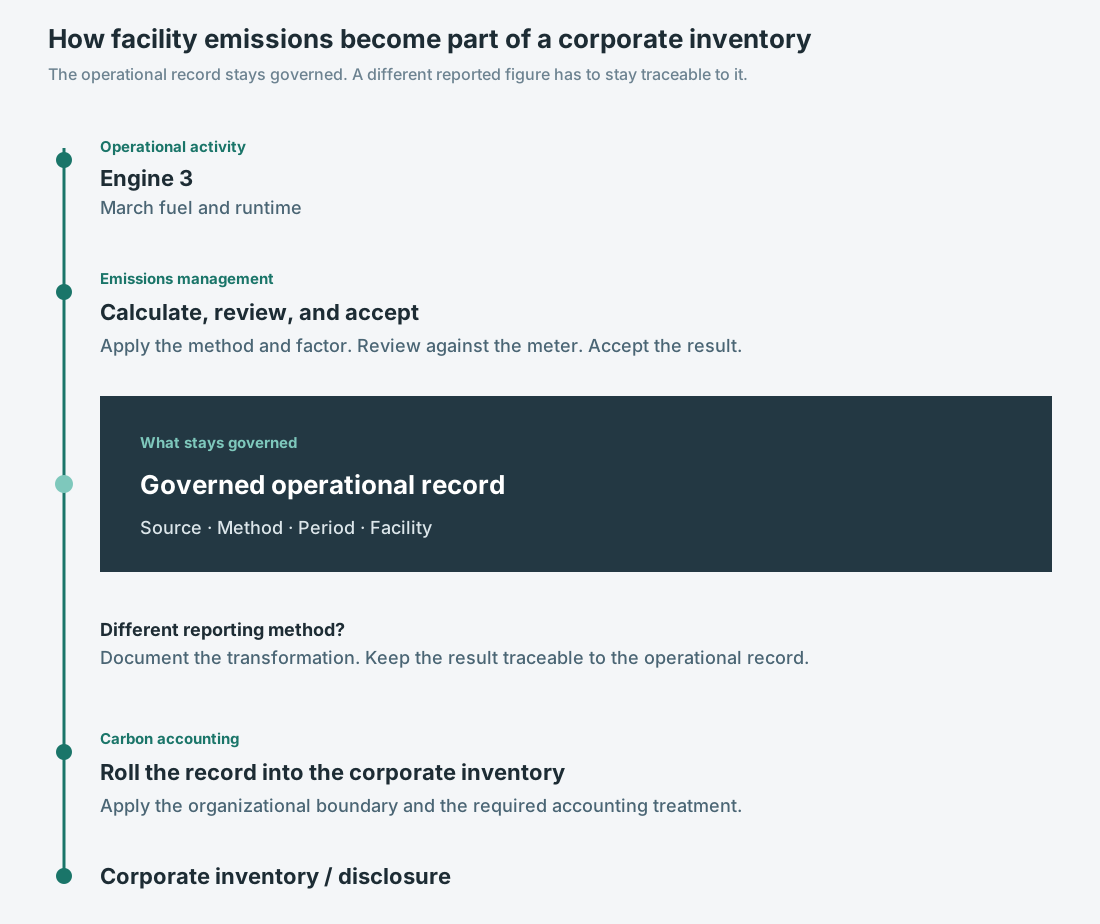
How facility emissions become part of a corporate inventory. The operational record stays governed. A different reported figure has to stay traceable to it.
What has to travel with the facility total is the source, the method, the period, and the facility. What has to stay governed is the operational record, not a rule that every reported tonne must match. A regulatory inventory and a corporate disclosure can use different boundaries, factors, or treatments. Those differences should remain documented and traceable to the operational record the facility already accepted.
Purchased electricity for the compressor station can follow that same path, from the utility meter to a facility Scope 2 figure and then to the corporate Scope 2 line, when the company accounts for purchased electricity from the meter rather than from a separate estimate. Scope 3 generally sits with carbon accounting because it concerns value-chain emissions rather than sources the company operates directly, and collecting it is its own job. Operated Scope 1 still has to be calculated and accepted at the facility before either job can treat it as finished.
Where does the handoff break?
The handoff from the facility's accepted result to the corporate inventory breaks when the facility environmental team closes the station's emissions on one calculation method and the corporate sustainability team applies a different factor to the same March fuel for a customer file or a disclosure, without recording why the factor changed. The March result then exists twice, and the meeting stops being about the engine. The meeting becomes an argument over which team's workbook is allowed to win. A documented factor change for a different reporting program is not that failure. An unexplained second calculation is.
The handoff also breaks when the figure in the corporate inventory cannot be traced. The disclosure file has a basin total. The method version for a source inside that basin total is in an email from February. When the question is which factor was used, the answer is a search through inboxes rather than a path from the inventory figure back to the meter.
A disclosure date makes the break sharper. The facility calculation gets overwritten so the corporate inventory total matches last quarter's estimate or an internal target. The corporate inventory and the regulatory filing now disagree with the meter, and the environmental lead who accepted the source calculation is looking at a figure the lead did not approve. When that calculation changes after the fact, the handoff has already failed, which is the pattern in 9 workflow bottlenecks that create industrial compliance risk.
Intensity and absolute tonnes get mixed in the same conversation. The corporate sustainability team can report a better intensity while the facility environmental team watches absolute tonnes rise because throughput rose, or watches a limit written in tonnes rather than tonnes per unit of output. Both of those descriptions can be true, and the facility total did not have to be rebuilt for the argument to start.
Frequently asked questions
Who usually owns carbon accounting versus emissions management?
A corporate sustainability team or a corporate GHG group usually owns the organizational boundary, the scopes, and the corporate inventory file that gets disclosed. The environmental lead at the facility usually owns the source calculation and the review of that calculation. Some companies put both jobs with one team, and the split can move. What fails is a disclosed figure that neither team can trace to an accepted source calculation.
Can the same emissions data support regulatory reporting and corporate disclosure?
The same activity can. Fuel volume, throughput, and hours may contribute to both an EPA GHGRP report and a corporate inventory prepared under the GHG Protocol Corporate Standard. The resulting figures are not necessarily interchangeable, because the reporting program can require a different boundary, factor, or adjustment, and that difference should stay documented and traceable to the governed operational record. The oil and gas filing context is in the EPA GHGRP reporting guide.
Does emissions management include emissions forecasting?
Forecasting can be part of emissions management when the facility environmental team tests how a production change, a project, or a retired asset would move emissions that team already governs. Forecasting is not the work of assembling last year's corporate inventory for disclosure. How a useful forecast differs from carrying last year's GHG inventory forward is covered in emissions forecasting in oil and gas.
Is carbon accounting the same as emissions reporting?
Carbon accounting assembles the organizational inventory for disclosure. Emissions reporting, as industrial teams usually mean it, is the work of preparing and defending the file that goes to an agency or a voluntary program. The difference between filing software and disclosure tooling is covered in the emissions reporting software guide.
Where does Scope 3 fit?
Scope 3 generally sits on the carbon-accounting side of this comparison because it concerns value-chain emissions rather than emissions from sources the company operates directly. Collecting and calculating it is its own job. Operated Scope 1 still has to be calculated and reviewed by the facility environmental team before it shows up in a corporate inventory.
Keep the handoff traceable
The practical test is whether the corporate inventory can be traced to the governed operational record, including any change the corporate method required. When it can, the disclosure and the station are describing the same operation, even if the reported figures are not identical. When it cannot, the handoff has broken: the company can no longer explain how the corporate figure relates to the operational record.
Validere can keep a facility or source calculation traceable to the activity and the method behind that calculation, including when that calculation supports a regulatory filing or a voluntary report. It can sit beside a disclosure tool the company already uses. It is not a carbon accounting system for every Scope 3 program. See how that calculation work is handled in emissions management software for air and GHG.