Ask an environmental manager what almost broke last year's greenhouse gas filing, and the answer is rarely the final report template. It is usually a production extract that arrived late, a calculation that changed after site review, an approval stuck in email, or supporting evidence nobody can reconstruct once the auditor asks for it.
Those failures look like software problems. They are reporting process problems. Emissions reporting software exists to automate that process: connect operational data, validate calculations, run approvals, and retain evidence under deadline pressure, not only generate a PDF when the scramble is over.
This guide is for buyers already evaluating platforms. It explains what emissions reporting software is, which reporting capabilities an emissions management platform should support for regulatory and voluntary needs, how to evaluate automated reporting workflows, why industrial emissions reporting has become harder to defend, how reporting platforms differ from carbon accounting tools, and how to pressure-test vendors against real filing work.
At a glance
- What it is: A platform that automates collection, calculation, validation, approval, and submission of emissions data for regulatory and voluntary reporting while maintaining audit-ready evidence.
- What it is not: A carbon footprint calculator alone, a generic ESG disclosure tool, or a substitute for the full emissions management software lifecycle.
- Who needs it: Environmental managers, air compliance managers, emissions specialists, and regulatory reporting leads running multi-facility industrial programs.
- How to choose: Evaluate automated collection, workflow automation, AI-assisted review, approvals, and evidence from operational systems to filed records, not only the final report output.
- Best for: Multi-site industrial organizations managing regulatory and voluntary emissions reporting.
What is emissions reporting software?
Emissions reporting software helps organizations collect emissions data, validate calculations, automate reporting workflows, and generate regulatory or voluntary disclosures from governed source information.
Definition
Emissions reporting software is a platform that automates the collection, calculation, validation, approval, and submission of emissions data for regulatory and voluntary reporting while maintaining audit-ready evidence.
A report is an output. The software’s job is to govern the process that produces that output so teams can repeat, review, and defend it months later.
In industrial settings, that process usually spans facility-level air and GHG inventories, agency submissions, voluntary methane or sustainability disclosures, and the evidence package behind every number. Broader environmental reporting software covers multi-media environmental outputs. Emissions reporting software narrows the conversation to the air and GHG reporting workflows that consume the most calendar time for many operators.
Organizations use it when spreadsheets and point tools stop scaling: multiple facilities, overlapping frameworks, late contractor data, changing methods, and auditors who want lineage (a clear path from reported value back to source data, method, and evidence) rather than a polished total.
This article stays inside reporting. For monitoring, measurement response, forecasting, and full platform evaluation, use the emissions management software pillar. For oil and gas demo criteria across the wider emissions program, see nine ways to evaluate emissions management software.
Modern emissions reporting is no longer just report generation
Most category pages still evaluate emissions reporting software by the reports it can generate. Buyers who have lived through filing week usually care about something else: whether the platform can automate the environmental work around those reports.
That distinction should become the evaluation lens early.
A modern emissions reporting platform should be judged on five connected capabilities:
- Connected operational data. Can production, monitoring, contractor, and field sources feed the inventory without uncontrolled spreadsheet extracts?
- Governed workflows. Are validation, review, approval, and corrections owned inside the system, or still handled in email?
- Workflow automation. Does the platform remove re-keying, route exceptions, update calculations when inputs change, and prepare recurring packages?
- Integrated AI. Can the software help identify data quality issues, accelerate investigations, assist reviewers, and reduce repetitive reporting work without removing accountability?
- Audit readiness. Can teams reproduce how a number was produced, who approved it, and what evidence supports it months later?
Modern platforms increasingly apply AI to those middle stages of the reporting cycle: anomaly detection, investigation support, review assistance, and repetitive package preparation. That is useful when AI sits inside the workflow. It is a distraction when it appears only as a demo feature with no path into approvals or evidence.
If a vendor leads with dashboards and templates, ask where automated reporting workflows, regulatory workflow automation, and AI-assisted review actually change the work. The rest of this article uses that lens.
Key takeaway: Emissions reporting is a workflow problem, not a report-generation problem. Evaluate platforms on the path from operational systems to audit-ready evidence.
Why this matters
Validere supports industrial organizations by connecting operational systems, governed calculations (approved methods applied under controlled version history), automated reporting workflows, and audit-ready evidence in one platform. That is the practical expression of the lens above: automate the environmental work around reporting, then generate the package from a process teams can defend.
For one published example, see how SECURE automated emissions data management across 50+ vendor sources that previously lived in spreadsheet-heavy quarterly processes.
Why emissions reporting has become more complex
Emissions reporting rarely fails because a team cannot multiply activity data by an emissions factor. It fails because the supporting process is fragmented.
Industrial operators now report across more frameworks, more facilities, and more data owners than a single shared workbook was designed to handle. One midstream company may run federal GHG reporting, state or provincial air inventories, voluntary methane disclosures, and corporate Scope 1 rollups from overlapping but not identical datasets. Each program has its own timing, evidence expectations, and review culture.
Operational data still arrives on different schedules. Production extracts, continuous monitoring files, lab results, contractor workbooks, and field investigation notes rarely land in the same week. When intake is informal, missing records surface days before submission rather than weeks before calculation.
Manual QA compounds the problem. Reviewers compare totals in email threads, chase corrections in unmarked spreadsheet versions, and approve packages without a durable record of what changed or why. That may survive one quiet year. It rarely survives an assurance review or an agency follow-up.
Regulatory change adds another layer. Methods, thresholds, and reporting formats evolve. Teams that hard-code last year’s logic into local files discover the update cost during the next filing cycle, when there is no spare capacity. Voluntary programs such as OGMP 2.0 sit beside regulatory obligations and often demand measurement-based evidence the annual spreadsheet process was never built to preserve.
The U.S. EPA Greenhouse Gas Reporting Program alone requires annual reporting from approximately 8,000 facilities under source-category rules that expect calculation transparency and recordkeeping, not only a final total. Canadian federal and provincial programs, plus state air inventory requirements, create parallel calendars for the same assets. Complexity is less about “more climate ambition” and more about concurrent reporting obligations running through the same operational systems.
The people living inside that complexity are rarely corporate sustainability generalists. Environmental managers own inventory integrity. Air compliance managers own agency timing and permit-linked emissions logic. Emissions specialists own quantification, QA/QC, and reconciliation when two methods disagree. Regulatory reporting leads own submission packages, approvals, and the evidence trail. When software is evaluated only through an ESG lens, those roles become afterthoughts in the demo.
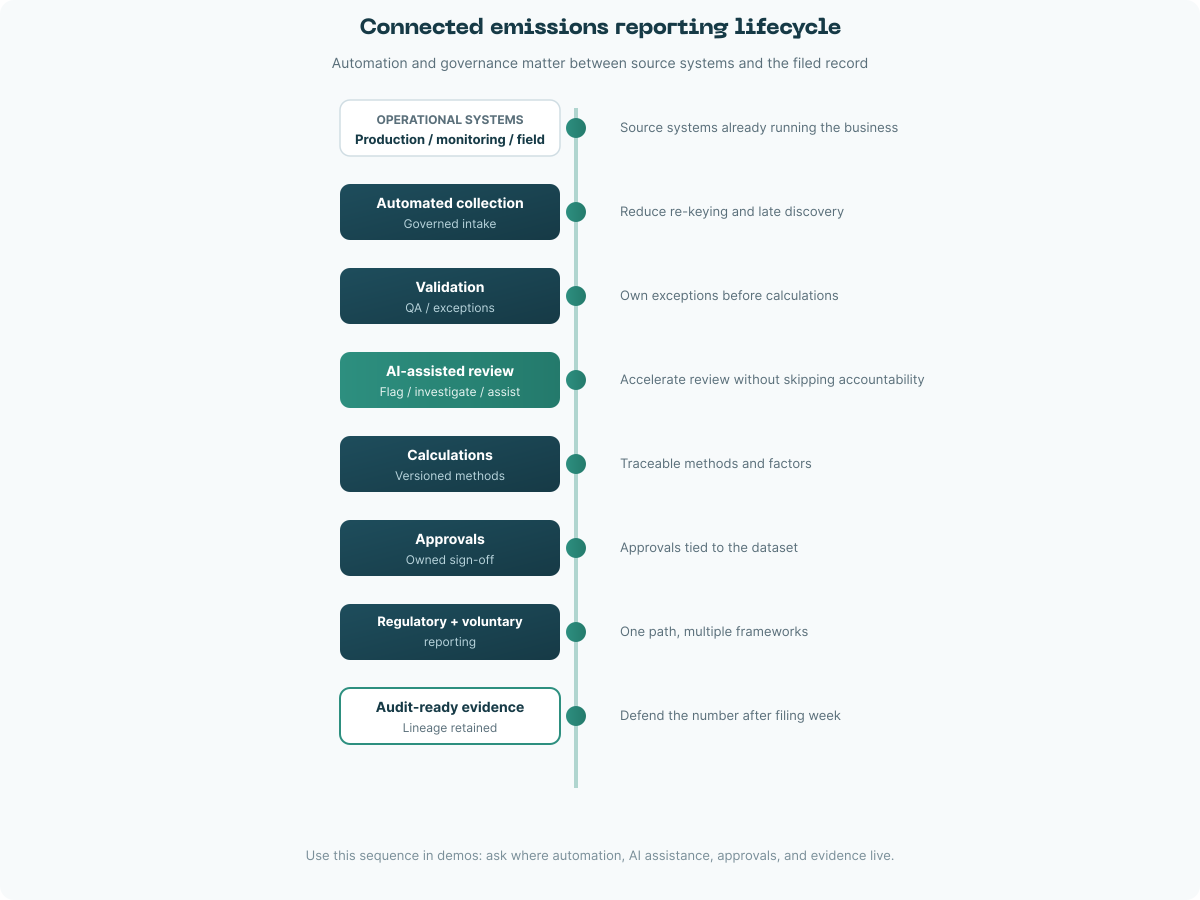
Figure 1: Traditional reporting still produces filings. Modern reporting produces filings teams can still explain after the deadline.
|
Traditional path |
Where it breaks |
|
Spreadsheets |
Conflicting versions, no durable ownership |
|
|
Approvals without data lineage |
|
Manual QA |
Exceptions found too late |
|
Last-minute corrections |
Changes without documented reason |
|
Submission |
Evidence scattered after the fact |
If your current process still looks like that table, buying a prettier export format will not fix reporting. You need automated reporting workflows with durable governance.
What modern emissions reporting software should do
Once buyers accept that reporting is a workflow problem, the next question is where the platform creates value in the cycle.
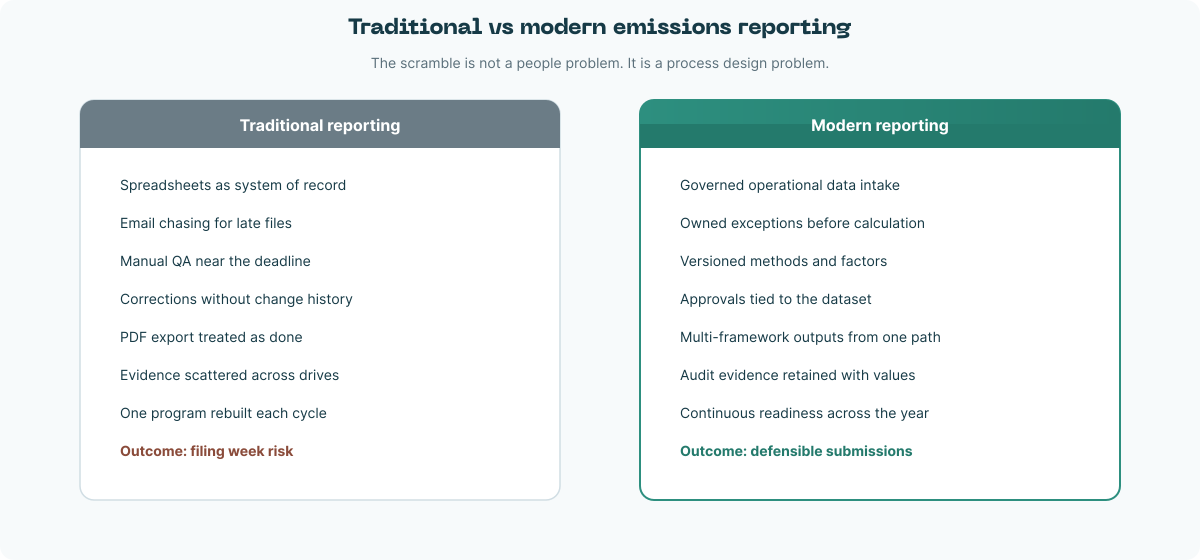
Figure 2: The connected emissions reporting lifecycle. Automation and AI assistance matter between collection and evidence retention.
Collect data automatically
Reporting quality starts with intake. Strong platforms connect to production systems, historians, monitoring technologies, enterprise applications, and governed file imports so teams are not re-keying activity data for every greenhouse gas or air emissions reporting cycle.
Validere’s public materials describe hardware-agnostic ingestion and interoperability across operational and environmental systems, including APIs and integrations with production data, monitoring technologies, ERPs, and data stores. Buyers should still require vendors to show the exact path for their systems, including what happens when a feed is late or incomplete.
Automated collection does not mean unsupervised trust. It means governed intake with clear ownership when something is missing, including which system is authoritative, how contractor files enter the same controls as SCADA extracts, and what happens when two sources disagree. Asset hierarchies must survive import. If facility, equipment, and source relationships collapse, later calculations become harder to defend. What a SCADA or historian extract has to survive before it is an emissions reporting input is covered in SCADA data for emissions reporting in oil and gas.
Validate data quality
If validation only happens after totals look wrong, the process is already late. Well-designed reporting software should flag missing records, out-of-range values, conflicting sources, and methodology mismatches before calculations are treated as final.
Useful QA/QC looks like an exception queue (an owned list of open data issues), not a dashboard that hides problems behind a green status tile. Leading platforms also apply AI here to identify data quality issues, cluster related exceptions, and help reviewers prioritize judgment work. AI should accelerate investigation. It should not silently rewrite the inventory.
Industrial emissions reporting needs ongoing validation across the period: late files, revised production volumes, equipment changes, and measurement events that reopen previously accepted values. If the platform cannot show that loop, teams recreate it offline.
Key takeaway: If exceptions only appear after totals look wrong, validation is already too late.
Support regulatory and voluntary reporting
Industrial buyers feel the most calendar risk in regulatory packages, and increasingly need voluntary outputs from the same operational sources. Ask vendors to show one of your regulatory packages and one voluntary path from the same governed dataset, not a generic carbon dashboard and a separate sustainability export.
Documented Validere regulatory coverage includes frameworks such as U.S. EPA GHGRP, U.S. EPA Air Emissions Reporting Requirements, Canadian federal GHGRP, selected state and provincial inventories, and related air and GHG pathways. Voluntary materials reference initiatives such as OGMP 2.0, GRI, SASB, and related methane and sustainability pathways. Exact fit still depends on asset mix and jurisdictions. See regulatory air and GHG reporting and voluntary emissions reporting, then require the same specificity from every shortlist candidate.
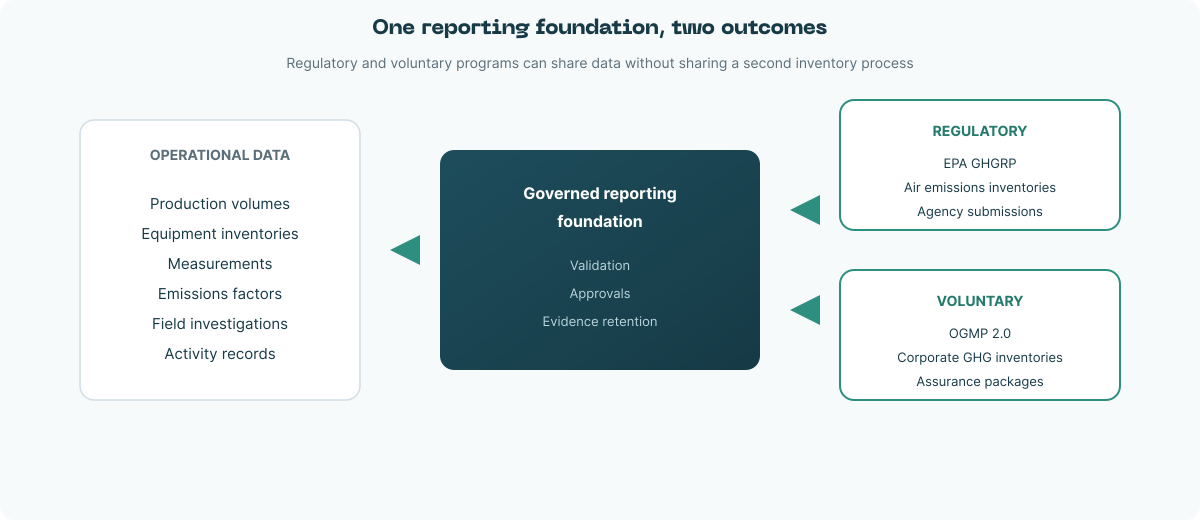
Figure 3: Regulatory and voluntary outcomes can share one reporting foundation when lineage and methods stay governed.
Create audit-ready records and connect operations
Audit readiness is the ability to show who approved what, which method and emissions factor version produced a value, what changed after review, and which comments or attachments support an exception decision. If a platform can generate a report but cannot reproduce how it was produced, you have an export tool.
Connected reporting keeps inventories tied to operational context: asset hierarchies, activity data, field findings, and investigation outcomes. Consider a compressor station methane investigation that should change how a period is quantified. If the investigation, inventory, and voluntary disclosure live in three tools, consistency becomes forced rather than governed.
Key takeaway: If you cannot reproduce how a number was produced, you do not have audit-ready reporting. You have an export.
The eight capabilities below expand these requirements into a buyer checklist for emissions management platforms that must support both regulatory and voluntary reporting.
Key features to look for in emissions reporting software
Use this table as a shortlist filter before demos. Each capability only matters if it maps to a failure mode your team already recognizes.
|
Capability |
Why it matters |
|
Automated data collection |
Reduces re-keying and late discovery of missing source records |
|
Automated reporting workflows |
Standardizes collection → validation → approval → submission |
|
Regulatory workflow automation |
Reduces rebuild work across recurring agency packages |
|
Audit trails |
Improves defensibility when methods or values are challenged |
|
QA/QC and exception handling |
Surfaces data issues before filing week |
|
AI-assisted review |
Helps prioritize anomalies and accelerate investigation |
|
Regulatory templates and packages |
Saves rebuild time across EPA, state, provincial, and air emissions reporting |
|
Voluntary reporting support |
Avoids a second inventory process for ESG or methane programs |
|
Integrations |
Connects production, monitoring, and enterprise systems |
|
Multi-site reporting controls |
Scales facility ownership with corporate oversight |
|
Calculation lineage |
Lets reviewers drill from output to method, factor, and source |
|
Correction and version management |
Preserves why a number changed after review |
Buyers often over-index on dashboard polish and under-index on exception handling. Reverse that during evaluation. A clean executive view is useful. An owned exception queue is what protects the filing.
For broader environmental compliance context around obligations and investigations, see how to choose environmental compliance software. The next section expands the reporting capabilities an emissions management platform should support when regulatory and voluntary obligations sit side by side.
8 reporting capabilities every emissions management platform should support
Buyers comparing emissions reporting software often ask a sharper question than feature lists suggest: which emissions management platform best supports regulatory and voluntary reporting needs? The answer depends less on how many templates a vendor shows and more on whether the platform can govern the work behind those templates.
Use the eight capabilities below as a practical checklist, alongside the emissions management software buyer's guide when reporting is only one part of a broader program.
1. Regulatory reporting
Oil and gas operators frequently report the same operational emissions data across federal programs, state or provincial inventories, methane initiatives, customer requests, and corporate sustainability reporting. The challenge is rarely creating each report independently. It is maintaining one governed operational dataset that supports all of them.
Picture a midstream team closing EPA Greenhouse Gas Reporting Program totals while a state air inventory and a methane package are due from overlapping production and equipment data. Without strong regulatory support, methods diverge by jurisdiction, evidence is assembled after the total is frozen, and filing week becomes reconstruction rather than closeout.
In the demo, ask for one of your real regulatory packages. Confirm method configuration, calculation lineage through submission, and what happens when source data arrives late or methods change mid-period. Mature emissions platforms connect operational intake to governed calculations and submission-ready packages instead of treating the agency form as a standalone document. For obligation and investigation context beyond the report itself, see environmental compliance software guidance.
2. Voluntary reporting
Voluntary reporting is complementary to regulatory work, not a parallel invent-your-own inventory. Operators use it for sustainability programs, customer or buyer requests, corporate ESG initiatives, and internal emissions targets. Activity data often overlaps with regulatory inventories; evidence expectations and audiences usually do not.
|
Same as regulatory |
Often different in voluntary |
|---|---|
|
Production and equipment sources |
Measurement or assurance expectations |
|
Facility Scope 1 activity |
Disclosure audience and packaging |
|
Need for governed methods |
Timing and narrative around performance |
Buyers should ask whether voluntary outputs reuse the same governed emissions dataset, how methodology differences are documented, and whether assurance packages can be produced without copying values into a parallel workbook. Enterprise platforms that treat voluntary reporting as another governed output keep totals reconcilable even when frameworks diverge.
3. MRV workflows
A common misconception is that MRV is a specialized methane program term with little relevance to day-to-day reporting software. In practice, Measurement, Reporting, and Verification is the discipline that turns operational activity into numbers reviewers can trust: capture or estimate inputs, apply approved methods, and confirm the path from source to disclosed value.
Without that path, reporting becomes a black box. Teams may produce a total and still fail verification because measurements, engineering estimates, or emissions factors cannot be explained. Confidence collapses when verification is a last-minute scramble.
Ask how measurement intake, calculation methods, QA/QC, and verification evidence connect in one workflow, including what happens when a measurement event should reopen a previously accepted value. Oil and gas buyers should also ask how field detection or LDAR findings feed inventory confidence when they matter to filings; see the LDAR software buyer's guide when inspection-to-repair records are part of the evidence chain. Well-designed reporting software makes MRV continuous rather than three disconnected handoffs. For the oil and gas process definition, where those handoffs break, and how MRV software differs from EMS, OGMP, and Subpart W, see what MRV means in oil and gas.
4. Audit-ready evidence
Emissions numbers alone are not enough. Reviewers ask for documentation, calculation transparency, assumptions, version history, and proof of who approved what.
Evaluation checklist
- Can you retrieve method and factor versions with the reported value?
- Are comments, attachments, and approval history retained after filing?
- Do corrections leave a durable trail with owner and reason?
- Can two facilities’ assumptions for the same equipment class be compared without email archaeology?
If the answer to those questions depends on shared drives and tribal knowledge, the risk is audit failure, not document clutter. That expectation also shows up in stronger environmental reporting software evaluations, where the lifecycle from source systems to audit evidence is the product.
5. Multi-framework reporting
A common buying mistake is scoring vendors by the length of their framework logo wall. The harder problem is reusing trusted emissions data across EPA or provincial filings, voluntary methane disclosures, corporate inventories, and internal performance reviews without rebuilding activity data for each output.
When multi-framework support is weak, teams copy values between systems. Totals diverge for reasons nobody can explain six months later. Every new framework increases workload instead of reusing a shared foundation.
Do not assume any platform supports every framework. Ask for the frameworks you file today and those on your 12-month roadmap, then watch whether one governed inventory can generate multiple outputs without duplicate entry and whether differences between reports are intentional and documented. Leading platforms keep a shared operational foundation and apply framework-specific logic at the reporting layer.
6. Carbon footprint tracking
Annual packaging is not the same as ongoing carbon footprint tracking. Environmental managers need facility visibility, period trends, and enough source detail to see where emissions are changing while there is still time to investigate.
Without that, inventories restart cold each cycle. Outliers appear too late. Facility comparisons fail because methods and completeness differ by site. The organization can still file on time and lack a current operational view.
Pressure-test period-over-period views, facility or source contributions, and whether footprint figures update as operational data arrives or only after a manual rebuild. Focus first on Scope 1 and operationally controlled emissions, where industrial reporting risk concentrates. Mature emissions platforms keep calculations current through the period so tracking is continuous readiness, not year-end reconstruction.
7. Workflow automation
Workflow automation protects accuracy, not only calendar time. Approvals, reviews, notifications, and site-to-corporate collaboration are where judgment either stays inside the system of record or disappears into email.
Without automation, ownership is unclear, notifications arrive late, and contested decisions leave weak evidence even when the filing goes out. Ask vendors to show a contested approval and a late file. Confirm approvals are tied to datasets, exceptions have owners, and multi-site collaboration preserves facility ownership with corporate oversight. Enterprise platforms that keep that judgment path inside governed workflows improve reporting accuracy; automation that only accelerates uncontrolled edits does not.
8. Data governance
Data governance is what makes regulatory and voluntary reporting trustworthy at the same time. Consistent calculations, centralized emissions data, controlled processes, and clear ownership are the control layer that keeps methods and approvals from fragmenting across sites.
Without governance, every facility invents a local process and corporate rollups hide unresolved exceptions. Voluntary and regulatory reports may share a brand name without sharing a data foundation.
Ask who can change methods, how factor libraries are controlled, whether sites retain local flexibility under corporate standards, and how the platform prevents silent overwrite of approved values. The platform that best supports both regulatory and voluntary needs is usually the one that can govern both outputs from the same trusted operational data path, with evidence that survives review.
Key takeaway: Choose the emissions management platform that can govern regulatory and voluntary outputs from one trusted operational data path, not the one with the longest template gallery.
How to evaluate emissions reporting software
General emissions software evaluation covers platform fit across monitoring, calculation, forecasting, and response. This section is narrower. It focuses on reporting-specific questions that expose whether a platform can survive a real filing cycle.
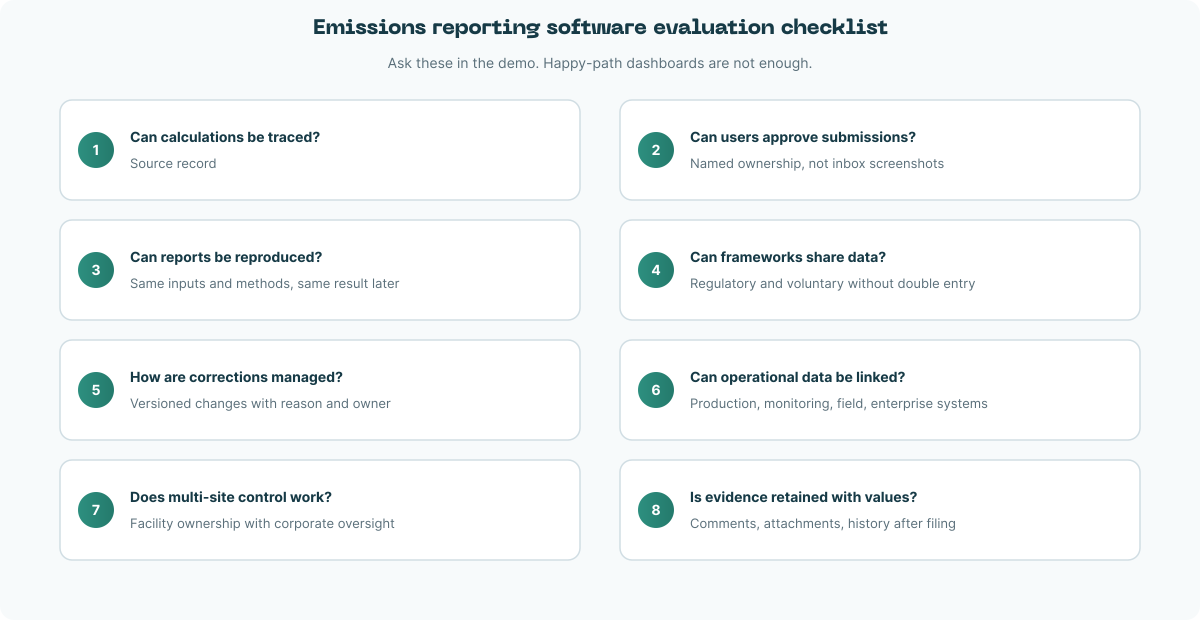
Figure 4: Reporting-specific demo checklist. Ask vendors to prove these with your data path.
Reporting questions that should decide the shortlist
- Can calculations be traced? Ask to drill from a reported value to source activity, method, emissions factor version, and reviewer comments.
- Can users approve submissions? Confirm named approvals tied to the underlying dataset, not screenshots of email threads.
- Can reports be reproduced? Six months later, can the same inputs and methods recreate the filed package?
- Can multiple frameworks share data? Regulatory and voluntary outputs should not require duplicate manual entry for the same activity.
- How are corrections managed? Look for versioned changes with reason codes, owners, and timestamps.
- Can operational data be linked? Require a walkthrough for your production, monitoring, or contractor sources, including late-feed handling.
- Does multi-site control work? Facility teams need ownership; corporate teams need oversight without forcing identical workflows everywhere.
- Is evidence retained with values? Attachments, comments, and history should remain available after submission.
What to bring into the demo
Do not let the vendor choose only happy-path data. Bring:
- One late or incomplete source file
- One methodology or factor change mid-period
- One contested approval between site and corporate reviewers
- One report package your team actually files
Those four scenarios reveal more than a polished category tour. They also keep the conversation on reporting operations rather than generic carbon messaging.
When the shortlist expands into measurement response, forecasting, or full program architecture, return to the emissions management software guide and the oil and gas evaluation criteria.
Common emissions reporting software buying mistakes
Shortlists often fail for predictable reasons. The product looked strong in a demo. The reporting workflow still broke under deadline pressure.
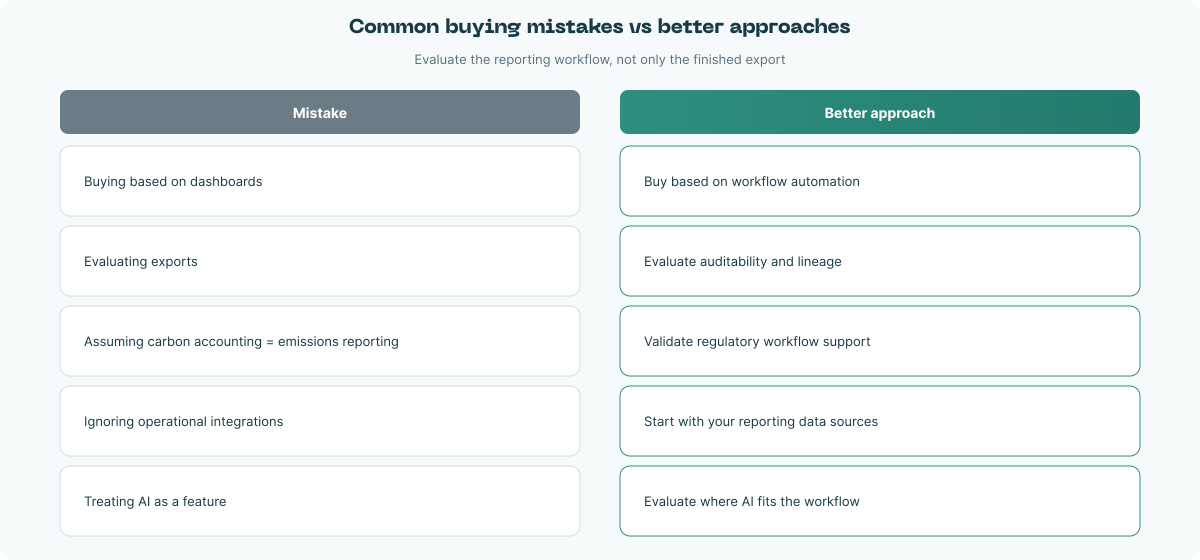
Figure 5: Common buying mistakes and better approaches. Use this as a filter before demos.
|
Mistake |
Better approach |
|
Buying based on dashboards |
Buy based on workflow automation |
|
Evaluating exports |
Evaluate auditability and lineage |
|
Assuming carbon accounting equals emissions reporting |
Validate support for regulatory workflows |
|
Ignoring operational integrations |
Start with your reporting data sources |
|
Treating AI as a feature |
Evaluate where AI fits into the workflow |
Those mistakes share one root cause: judging the finished report instead of the process that creates it. Organizations evaluating reporting capabilities as part of a broader emissions strategy should also understand how reporting fits within a complete emissions management software platform.
Emissions reporting software vs carbon accounting software
The SERP mixes these categories constantly. Buyers pay for that confusion later.
Carbon accounting software often emphasizes corporate Scope 1, Scope 2, and Scope 3 inventories for sustainability disclosure, investor reporting, and enterprise climate programs. Emissions reporting software, as industrial buyers usually mean it, emphasizes facility-level inventories, regulatory packages, environmental team workflows, and the governance required to defend those numbers under operational conditions.
The categories overlap. Many platforms claim both. Treat the table below as common areas of emphasis, not absolute walls.
|
Emphasis often stronger in emissions reporting |
Emphasis often stronger in carbon accounting |
|
Regulatory and agency reporting |
Corporate sustainability disclosure |
|
Operational and facility workflows |
Enterprise climate and ESG programs |
|
Environmental and air compliance teams |
Sustainability and finance-adjacent teams |
|
Facility- and source-level inventories |
Corporate rollups and Scope 3 collection |
|
Approvals, QA/QC, and audit evidence for filings |
Framework coverage for disclosure narratives |
|
Continuous reporting readiness |
Annual or periodic footprint assembly |
A carbon accounting platform can be the right buy when corporate disclosure is the bottleneck and facility calculations are already governed elsewhere. An emissions reporting platform is usually the better starting point when environmental managers are reconciling operational data, preparing agency submissions, and defending source-level methods.
Many industrial organizations eventually need both outcomes. The mistake is assuming a disclosure-first tool automatically owns regulatory reporting operations, or that a regulatory filing workflow automatically satisfies every corporate disclosure need.
For the broader environmental reporting category that spans multi-media outputs, see environmental reporting software. For platform-level emissions program design, stay with the emissions management software pillar.
Why connected reporting matters
The lifecycle above is the product. Templates are only one stage inside it.
Disconnected reporting shows up as familiar symptoms: inventories nobody trusts until someone rebuilds them, voluntary and regulatory totals that diverge without explanation, and audit requests that trigger spreadsheet archaeology. Connected reporting does not eliminate judgment calls. It makes those calls visible, owned, and recoverable.
Read “automated emissions reporting” carefully in vendor materials. Automation that skips validation and approvals creates faster wrong answers. Useful automation removes re-keying, routes exceptions, preserves lineage, prepares packages from governed data, and uses AI to reduce repetitive review load without removing accountability.
For oil and gas, utilities, chemicals, and other asset-heavy operators, reporting software earns more when it sits close to operations than when it floats as a corporate sustainability sidecar. Collection automation, earlier exception ownership, approvals against data, and retained evidence shrink filing week without removing judgment. They leave a record that survives the next auditor request.
How Validere approaches emissions reporting
There are two ways to build emissions reporting software.
One starts with the report.
The other starts with the operational workflow that creates the report.
Validere is built around the second approach: connecting source systems, automating collection and validation, applying governed calculations, capturing approvals, supporting regulatory and voluntary outputs, and retaining audit-ready evidence. The report is still required. It is no longer the center of the design.
That philosophy shows up in practice:
- automating intake from operational and measurement systems rather than asking teams to rebuild inventories from scratch each cycle
- supporting regulatory and voluntary reporting from the same governed calculation foundation, including frameworks documented on Validere’s regulatory and voluntary emissions pages
- embedding AI into reporting and investigation workflows so teams can identify issues, accelerate review, and reduce repetitive work without treating AI as a separate novelty
- preserving calculation transparency and lineage so reported values can be investigated back to methods and sources
- connecting reporting to broader emissions management work instead of isolating filing as a separate sustainability process
- working with existing systems through documented platform and integrations patterns where full stack replacement is unnecessary
In SECURE’s published case study, that meant consolidating data from more than 50 vendor sources that had previously been managed through spreadsheet-heavy quarterly processes, then moving collection, quantification, and reporting into a governed platform with stronger facility-level attribution and auditability. The case study describes time savings each quarter through automation, fewer formula-driven spreadsheet errors, and greater confidence in reported numbers. It does not publish a single hours-saved total, so treat the value as workflow evidence rather than a universal benchmark.
Why Validere: Most tools help you create reports. Validere helps you operate the reporting workflow that makes those reports defensible.
That fit is strongest for asset-heavy industrial operators. Validere is not positioned as a generic corporate carbon accounting suite for every Scope 3 disclosure scenario. Buyers whose primary bottleneck is enterprise climate disclosure may still need complementary tools. Buyers whose bottleneck is facility-level regulatory and voluntary reporting under operational complexity should evaluate Validere against that job.
See how Validere supports regulatory air and GHG reporting →
Frequently asked questions
What is emissions reporting software?
Emissions reporting software is a platform that automates the collection, calculation, validation, approval, and submission of emissions data for regulatory and voluntary reporting while maintaining audit-ready evidence.
Who uses emissions reporting software?
Primary users include environmental managers, air compliance managers, emissions specialists, and regulatory reporting leads. Secondary users often include EHS directors, operations excellence teams, sustainability managers, and IT or digital teams supporting integrations.
How does emissions reporting software differ from carbon accounting software?
Emissions reporting software typically emphasizes facility-level inventories, regulatory submissions, environmental team workflows, and audit governance. Carbon accounting software often emphasizes corporate Scope 1, Scope 2, and Scope 3 footprints and sustainability disclosure. Many platforms overlap; buyers should match the product to the bottleneck.
Can emissions reporting software automate EPA reporting?
Many platforms can automate data collection, calculations, QA/QC, package generation, and evidence retention for EPA Greenhouse Gas Reporting Program workflows. “Automate” should still mean governed automation with review and approvals. Confirm your source categories, calculation methods, and submission package requirements in the demo.
Can emissions reporting software support voluntary reporting?
Yes, when the platform can reuse governed operational data for voluntary frameworks such as OGMP 2.0, GRI, or SASB without creating a second inventory process. Ask how regulatory and voluntary outputs share methods, evidence, and approvals.
What is MRV in emissions reporting?
MRV stands for Measurement, Reporting, and Verification. In emissions reporting, it is the workflow that connects operational inputs to approved calculations and evidence reviewers can trust. Strong emissions management platforms treat MRV as a continuous process, not three disconnected handoffs. For the operator-facing definition, see what MRV means in oil and gas.
What reporting capabilities should emissions management software include?
At minimum, buyers should evaluate regulatory reporting, voluntary reporting, MRV workflows, audit-ready evidence, multi-framework outputs, carbon footprint tracking, workflow automation, and data governance. The decisive test is whether regulatory and voluntary reports can share a trusted operational data path.
What industries use emissions reporting software?
Oil and gas (upstream, midstream, downstream), utilities, chemical manufacturing, refining, and other multi-site industrial operators are common users. Any organization with facility-level air or GHG obligations and recurring audit pressure can benefit when spreadsheets stop scaling.
Choosing emissions reporting software that holds up after filing week
If you are building a shortlist, start with the reporting lifecycle your team already runs when files are late and approvals are contested. Ask vendors to prove automated collection, AI-assisted review, lineage, multi-framework outputs, and evidence retention with your data path. Keep the emissions management software pillar nearby for broader program decisions, and use environmental reporting software when the scope extends beyond air and GHG.
When the bottleneck is industrial emissions reporting itself, evaluate platforms that automate the environmental work around reporting, not only the finished export.
Or start with Validere’s regulatory air and GHG reporting approach, then request a demo against your own filing workflow.