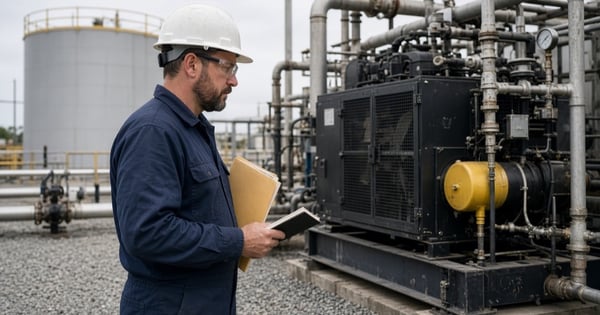
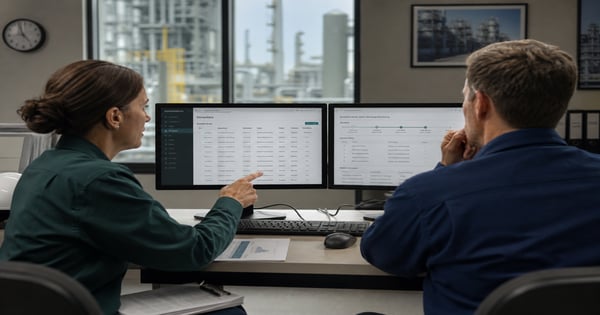
An industrial operator is comparing two software proposals. Both can display greenhouse gas emissions in tonnes of carbon dioxide equivalent (CO₂e). One is an ESG platform; the other is emissions management software. They appear to cover the same emissions information, but the work behind those figures can be quite different.
An ESG platform typically helps manage corporate sustainability disclosures, while emissions management software supports the calculations, reviews, and reporting behind facility emissions. Some platforms cover both jobs. Others work alongside separate systems. Before evaluating vendors, the buyer needs to establish which responsibilities each proposal actually covers.
What an ESG platform and emissions management software each do
In many companies, sustainability or disclosure teams use an ESG platform to collect information across environmental, social, and governance topics and prepare corporate disclosures. Depending on the platform, that can include materiality assessments, performance tracking, mapping disclosures to reporting requirements, and maintaining evidence behind reported metrics. Emissions figures may appear alongside information on water use, workforce safety, and governance. Some ESG platforms also calculate a corporate greenhouse gas inventory.
Environmental teams commonly use emissions management software to calculate source and facility emissions, investigate discrepancies, review results, and prepare regulatory or voluntary reports. Depending on the system, those results can also support measurement response, inspection priorities, and forecasts of how operational changes could affect emissions. Teams may need to revisit calculations as operating data, measurement results, or reporting methods change.
ESG platform vs emissions management: Where the responsibilities differ
Both proposals can display a facility emissions total. That display does not establish which system supports the work behind it. Emissions management includes investigating calculations, correcting discrepancies, and documenting changes. ESG reporting includes placing the relevant results into a broader disclosure alongside other sustainability indicators. A dashboard alone does not demonstrate how the underlying calculation is managed.
A corporate ESG platform may track the company's greenhouse gas inventory, while the environmental team also needs source-level calculations for pollutants such as NOx and VOCs to support air permitting and regulatory reporting. Those air calculations are not the same job as the corporate greenhouse gas disclosure, even when both use data from the same facility.
Carbon accounting is another responsibility, and it does not necessarily require another software purchase. It involves quantifying and reporting an organization's greenhouse gas inventory across the applicable scopes. That work may happen within an ESG platform or in a separate system. The guide to carbon accounting vs emissions management explains how organizational GHG accounting relates to the calculations and records managed at the facility.
For companies comparing ESG platforms with broader environmental reporting, compliance, or EHS software, the environmental reporting software guide explains how those categories differ.
When an organization needs one, the other, or both
Start by evaluating an ESG platform when the main challenge is collecting information across departments and preparing the corporate sustainability disclosure. The team may already have a reviewed facility emissions result available, even if the related regulatory filing has not yet been completed. The platform needs to incorporate that result while preserving its reporting status. It does not have to rerun the source calculation.
Start by evaluating emissions management software when the main challenge is at the facility. Someone still has to calculate a source, investigate a discrepancy, reconcile a measurement, or defend an air or GHG report. Depending on the reporting requirements, the disclosure may use a documented estimate while the facility review is still underway. The priority is the software that can handle the work still open.
Upstream and midstream operators often need to manage facility emissions and prepare corporate sustainability disclosures. These responsibilities may sit in one platform or across separate systems. The buying decision depends on which work the software can support, not simply whether it can display the required emissions figures.
How facility emissions data supports an ESG disclosure
An environmental team has prepared and reviewed emissions results for a reporting period. Those results may be ready for regulatory reporting, or they may be provisional figures that could change as the review is completed. The sustainability team needs them alongside water use, workforce safety, and governance indicators in a corporate ESG disclosure. The disclosure may use a different reporting boundary or a different calculation method from the facility result.
When that happens, the company documents how the disclosed figure relates to the operational result. That record should explain the adjustment, identify which version of the calculation was used, indicate whether the result relies on estimated data, and preserve its review or approval status. The original facility calculation should remain traceable, even when the disclosure uses an adjusted figure.
An accepted facility total is not automatically the figure used in a corporate disclosure. Different reporting boundaries or calculation methods may produce different results from related operational data. The reconciliation should explain those differences and identify the units, the gases, and any conversion assumptions used, including when a result is expressed as an individual gas or as carbon dioxide equivalent.
A gas processing facility might revise a flare emissions calculation after correcting the underlying volume data. The environmental team needs to preserve the revised calculation. The people preparing the disclosure need to know whether the disclosure used the earlier figure, and whether the revision changes the reported total. If the report is still being prepared, the company determines which result to use and documents that decision. If the report has already been published, the original reporting record should be preserved while the company determines whether a correction or restatement is required. The treatment depends on the applicable requirements, including whether the change reflects new information or an error in what was previously reported.
What to ask in the demonstration
For emissions management software: can the vendor show how a source-level emissions calculation is reviewed and corrected, including the supporting operational data, the calculation method, and the change history?
For an ESG platform: can the vendor show how an emissions result is incorporated into a corporate disclosure, including its reporting status, the supporting evidence, and the version used?
When both responsibilities are in scope: if the underlying emissions calculation changes, how will the organization identify which result was used in a disclosure and document any required reconciliation or correction?
For more detailed criteria on facility calculations, measurement response, and reporting workflows, see the emissions management software buyer's guide.
Where Validere fits
ESG disclosure depends on emissions data the company can explain and support. Validere helps industrial teams calculate, review, and report air and GHG emissions using operational data and supporting records. Those results can support broader sustainability reporting, whether the company uses a separate ESG platform or another disclosure process.
Explore Validere's Air & GHG emissions software.
See Validere in action
See how Validere connects and automates environmental workflows.

Darren Belgrave
darren.belgrave@validere.comDarren Belgrave is Marketing Manager at Validere, where he focuses on environmental operations, emissions management, and industrial software strategy.