An energy company may already have the information an environmental report needs and still have trouble producing a submission someone else can check. Production records, inspection results, maintenance history, emissions calculations, and approvals often sit in different systems. The environmental team has to bring them together, check them for inconsistencies, and decide which records support the submission.
EHS management software helps connect environmental inspections, permits, corrective actions, operating records, and approvals. When it is integrated with emissions and operating systems, it can give teams a clearer view of the information behind a report, including missing inputs and work that still has to be finished before submission.
This guide explains how EHS software supports compliance reporting in energy operations, which capabilities matter most, and what to look for when evaluating a platform.
What is EHS management software?
EHS management software helps organizations run environmental, health, and safety programs from shared workflows and a common record. Typical work includes incident reporting and investigations, inspections and audits, corrective and preventive actions, risk assessments, permit and document management, training, regulatory reporting, and dashboards.
Those capabilities remain important. For an energy operator, the evaluation also has to include environmental measurements, maintenance records, emissions calculations, and the reporting review. Environmental modules have been part of EHS platforms for years.
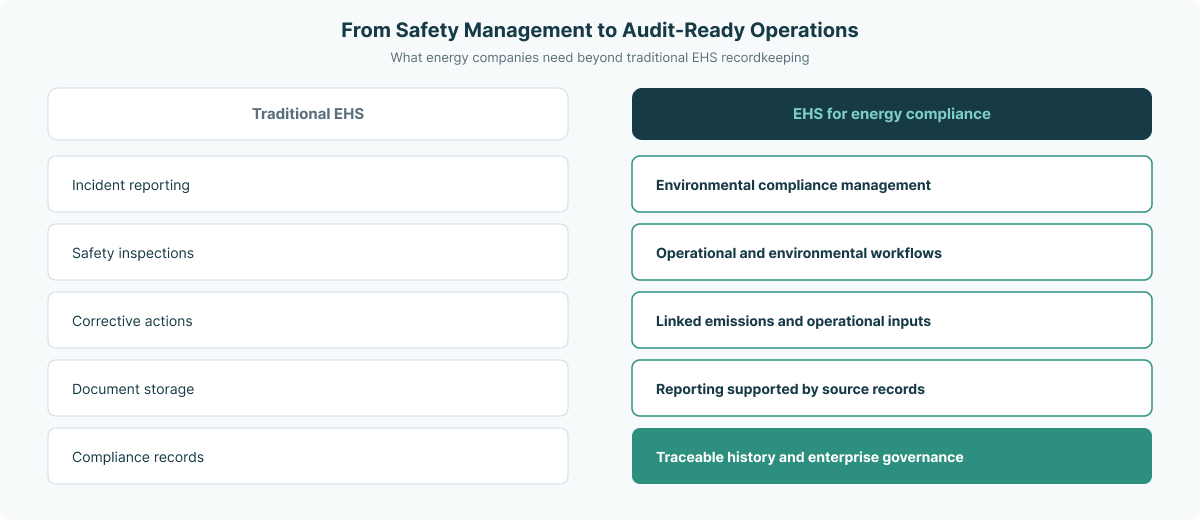
Figure 1. What an EHS record may already hold, and the reporting questions that still have to be answered.
EHS management software vs. environmental compliance software
Buyers often search these names as if they were the same product. EHS management software usually covers incidents, inspections, audits, corrective actions, training, and health and safety, and it may include environmental modules. Environmental compliance software is organized around permits, environmental inspections, emissions calculations, regulatory submissions, and the records for that work.
The distinction matters when a company has to decide whether its current EHS platform can support the environmental reporting it has to do, or whether that reporting needs environmental compliance software. Some organizations use both systems. Others run the work on one platform. EHS software versus environmental compliance software compares when the suite is enough, when both systems stay, and when one platform carries the work.
Why energy companies have different EHS reporting requirements
Managing compliance at one facility is different from coordinating it across wells, compressor stations, pipelines, processing plants, and utility assets. Permits and jurisdictions differ. After an acquisition, the records behind one report may still sit in the systems each business already used.
Operations produces the measurements, maintenance holds the inspection and repair history, and environmental staff manage the permits and the submission. Engineering may check a calculation. Corporate teams need consistent visibility into compliance status across facilities, even when their obligations differ. Multi-site EHS software can support facility-specific permit schedules while giving corporate teams a consistent view of reporting progress and outstanding compliance activities.
Under the U.S. EPA's Greenhouse Gas Reporting Program Subpart W, covered facilities must collect specified data, calculate emissions, apply applicable quality-assurance and missing-data procedures, maintain records, and report results. Other environmental obligations, including Canada's enhanced oil and gas methane regulations (SOR/2025-280), registered on 12 December 2025, set related but distinct monitoring, record keeping, and compliance requirements. Parts of those requirements come into force later. Reporting deadlines and the rules themselves can change, so the team confirms the current text for the reporting year. One inventory process does not satisfy every program.
A Title V permit may identify emissions sources, applicable limits, and monitoring or calculation requirements. The environmental team still needs the operating data and supporting records behind this period's inventory.
A methane inventory may depend on production volumes, leak inspections, maintenance records, equipment inventories, and calculation methods stored across several systems. Even when a team can complete the submission, retrieving the supporting records later may require additional work.
How EHS workflows support compliance reporting
A regulatory submission brings together records and decisions made throughout the reporting period. The inspection, the operating record, the calculation, and the approval have to be findable with that submission.
A field technician completes a routine environmental inspection at a compressor station on a mobile form. The form can be submitted the same day. In practice, that inspection may have to open a corrective action, notify a reviewer, and stay attached to the permit condition it was checking. Whether the finding also changes an emissions total depends on the method in use. The submitted form documents the inspection. The corrective action stays open until someone closes it.
A similar challenge arises when operating data indicates that a site is approaching a permit limit. Operations may see it first. The environmental team still needs the recent inspection, the maintenance history, and any earlier exception if it is going to explain the response while the event is current.
A spreadsheet may produce an accurate result and still make it difficult for another reviewer to trace how the result was assembled. Moving that spreadsheet into another system does not, by itself, solve the problem. The underlying records still have to be connected to the reporting process.
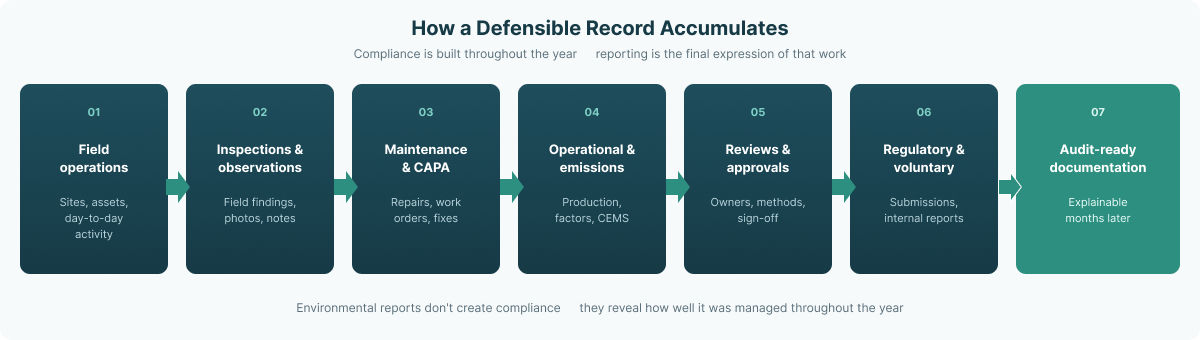
Figure 2. Field activity, review, and the submission. A later question should be able to follow that sequence.
When a regulator asks about an emissions value from several months ago, the environmental manager needs the records behind that value and the people who reviewed it. If the calculation is in email and the inspection is in another system, the reply takes as long as the search. A connected system makes that review easier by identifying the records behind the reported result, including source data retained in other systems. Reviewers still need to establish which values and methods were used for the submission.
A dashboard helps when it shows open inspections, corrective actions, and missing inputs while there is time to act on them.
Reporting activities
A feature list alone will not show whether an EHS platform can support the company's reporting requirements. These are the activities an energy company can match against the reports it actually prepares.
|
Reporting activity |
What to look for |
|---|---|
|
Permit compliance |
The condition, the inspection, the exception, the corrective action, and the evidence for each |
|
Air and GHG reporting |
The operating input, the calculation, the review, and the reported result. The calculation may sit in a connected system |
|
Methane and LDAR programs |
Survey, detection, investigation, repair, and verification records where that program requires them |
|
Health and safety reporting |
Incidents, investigations, corrective actions, and the records those programs require |
|
Oversight across facilities |
Status and evidence from facilities that do not share the same obligations |
Air and GHG calculations require different capabilities from inspections and permit management. Both can operate within one platform, or Air & GHG emissions software can handle the calculations while the EHS system manages inspections and corrective actions.
Much of the report starts outside the EHS application. Maintenance history may stay in the maintenance system. A laboratory result, a continuous monitor, or a SCADA extract can be the right measurement and still be the wrong period or the wrong source. An effective integration preserves the source, the reporting period, and the identity of the value used in the calculation.
Someone still accepts the operating value and approves the reported result. That acceptance and approval belong to the company's in-house compliance reporting program. Reviewers should be able to retrieve the decision and its supporting records later.
Corporate methods and retention rules can stay consistent while a facility keeps the schedule and the forms its permit requires.
How AI supports environmental and EHS teams
AI can help environmental teams find missing information, retrieve records, review a difference between two figures from the same period, and prepare a reporting narrative. How useful that is depends on the quality of the information available and on the task. A person reviews the output before it is used in a report or an investigation. The output does not determine whether the operation is compliant, and a history of the output and the review depends on how the tool is implemented.
Vendor evaluation
Evaluate how the software handles the reporting process, from field activity through review and submission.
|
Area |
What a demonstration should show |
|---|---|
|
Workflows |
A facility with a different permit can use its own schedule without a separate build |
|
Integrations |
The source, the reporting period, and the identity of a value stay with the calculation, including a value that remains in another system |
|
Environmental work |
Permits, inspections, corrective actions, and the reporting record, in addition to incidents |
|
Review history |
A later correction can be told apart from the original approval |
|
Reporting status |
Open inspections, corrective actions, and missing inputs are visible before the deadline |
|
AI |
The task it performs, and the review before anyone uses the output |
- Show an inspection that opens a corrective action against the permit condition it checked.
- Show an emissions value from the operating record through review, and name any step that stays in another system.
- Change a source value after approval, and show the original result beside the revision.
- Show a facility whose permit differs from the corporate template.
- Show an AI output and the review before it is used.
Implementation risks
An EHS implementation can run into trouble even when the software includes the capabilities above. Common risks include replacing too many existing systems in the first phase, applying one workflow to facilities with different obligations, and leaving ownership unclear after go-live. A phased oil and gas rollout can begin with the systems and facilities most important to reporting.
Why energy companies choose Validere
Validere supports environmental inspections, corrective actions, emissions calculations, and regulatory reporting on one platform. It can also use data from maintenance applications, historians, and other systems the company already runs.
The environmental compliance page describes a U.S. oil and gas producer's inspection program, including AVO, Method 22, and LDAR or OGI surveys, with faster reporting for 750+ weekly inspections. Mobile inspections, corrective-action tracking, and dashboards are product capabilities described on that same page.
A separate case is a North American midstream operator. Validere consolidated emissions and volumetric data collection across that operator's business units. The operator saved 2,300+ hours a year on monthly Scope 1 reporting. The midstream case study is the source for that result.
Talk to an expert about environmental inspections and emissions reporting.
Frequently asked questions
What is EHS management software?
EHS management software is used to run environmental, health, and safety work from shared workflows. That work includes incidents, inspections, corrective actions, permits, training, and regulatory reporting. For an energy company, the test is whether a reported value can be traced to the work that produced it.
What is the difference between EHS software and environmental compliance software?
EHS software covers environmental, health, and safety programs, and it may include environmental modules. Environmental compliance software is organized around permits, environmental inspections, and regulatory reporting. Some organizations use both. Others run the work on one platform. The decision is whether the current EHS platform can support the environmental reporting. EHS software versus environmental compliance software compares that decision.
How does EHS software support energy compliance reporting?
It supports reporting when the work done during the period can be found with the submission. An air or GHG calculation may run in that platform or in a connected emissions system. The team should be able to see which system performed the calculation.
What should energy companies look for in EHS management software?
Look for a permit inspection and its corrective action, an emissions value traced from the operating record through review, a correction made after approval, and a facility whose obligations differ from the corporate template. Also look at where a person reviews an AI output before it is used.
Can EHS software use operating and emissions data from another system?
It can, when the integration preserves the source, the reporting period, and the identity of the value used in the calculation. The maintenance record, the laboratory result, or the historian series may stay in the original system.
Is EHS software only for workplace safety?
Incident management and workplace safety remain core uses. Environmental modules have been part of many EHS platforms for years. An energy buyer still has to check permit, emissions, and reporting depth. A safety record does not establish the emissions calculation.
Conclusion
For energy companies, EHS management software has to support more than collecting inspections and managing corrective actions. It should help teams coordinate environmental work across facilities, identify outstanding requirements, and connect the records needed for compliance reporting. The right platform makes that work easier to manage throughout the reporting period, including before a submission is due.