Many EHS software implementations fail to improve the underlying process. Not because the software is incapable, but because organizations digitize existing workflows without first defining how work should change.
Buying EHS management software is not the same as successfully implementing it. The platform may provide forms, workflows, dashboards, and reporting capabilities. The implementation plan determines how those capabilities are applied across facilities, teams, regulatory programs, and existing systems. Teams whose primary pain is permits, obligations, and environmental reporting should also keep environmental compliance software evaluation criteria in view as they shape the first phase.
That distinction matters in oil and gas, where environmental, health, safety, compliance, and operational information is often distributed across assets, jurisdictions, departments, and technology environments. Upstream, midstream, and downstream operations can require different workflows even inside the same company. Under the U.S. EPA Greenhouse Gas Reporting Program, petroleum and natural gas systems alone account for thousands of reporting facilities, including obligations defined in Subpart W. Safety programs may sit under OSHA Process Safety Management. Voluntary inventories often follow the GHG Protocol Corporate Standard. Environmental management system expectations are often framed by ISO 14001.
A successful implementation therefore does more than digitize existing forms. It establishes how information will be collected, governed, connected, reviewed, and used across the organization. Software supports that operating model. It does not define it.
This guide gives environmental, health and safety, compliance, operations, and IT leaders a practical framework for EHS software across oil and gas operations: requirements, migration, change management, phased deployment, adoption, and measurement. What EHS software covers for an oil and gas operator, and which platforms belong on a shortlist, is in Top EHS Software for Energy and Oil & Gas. The principles apply broadly. What changes is the operating context in which they must be applied.
At a glance
- What it is: Software for managing environmental obligations, data, workflows, reporting, and audit evidence across facilities and teams.
- Who needs it: Organizations where compliance work spans field data, operational systems, calculations, reviews, and multiple reporting programs.
- Key distinction: Environmental compliance software, environmental management software, and environmental management systems (EMS) are related but not interchangeable. For a deep dive on the seven capabilities that determine operational fit, see Top 7 Environmental Compliance Software Features.
- How to evaluate it: Map requirements and workflows first, then test shortlisted platforms against realistic data, exceptions, approvals, and corrections. Do not rely on polished demos alone.
Download: Environmental Compliance Software Evaluation Kit → — requirements worksheet, vendor demo brief, POC test plan, and scoring matrix from this guide.
EHS software implementation lifecycle from outcomes through continuous improvement
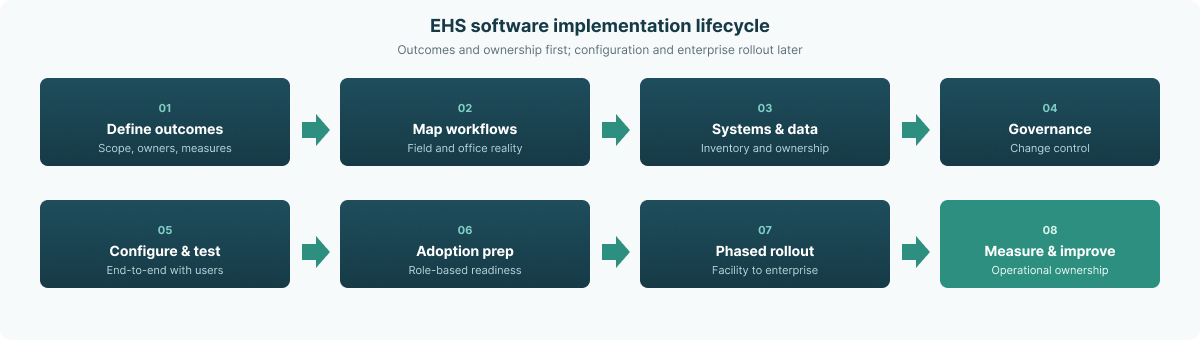
Figure 1: Implementation lifecycle. Configuration is only one stage. Outcomes, workflow mapping, data ownership, governance, testing, adoption, and measurement determine whether deployment improves the process.
Why EHS software implementation is complex in oil and gas
The principles behind a successful software implementation are not unique to oil and gas. Clear requirements, defined ownership, reliable data, user participation, and ongoing governance matter in any industry. The Canadian Centre for Occupational Health and Safety describes a health and safety management system as an interconnected set of processes used to reduce risk and protect workers. Software can support that system. It cannot replace the ownership and operating practices behind it.
What changes in oil and gas is the operating context.
An oil and gas organization may need to support workflows across upstream production sites, gathering and processing infrastructure, pipelines and terminals, refineries and petrochemical facilities, corporate environmental and safety teams, contractors, and geographically dispersed field operations. Regulatory obligations can differ by asset and jurisdiction. Connectivity in the field is often uneven. Data may already live in production systems, emissions monitoring technologies, ERP platforms, data warehouses, shared drives, and local spreadsheets.
The scale of regulated reporting alone illustrates the coordination problem. EPA's GHGRP Petroleum and Natural Gas Systems profile shows 2,298 facilities reporting under Subpart W for reporting year 2023, spanning segments from onshore production and gathering and boosting through processing, transmission compression, and distribution. Those obligations sit beside permit programs, inspections, incidents, and process-safety expectations that vary by facility type. IOGP guidance emphasizes that process safety and asset integrity depend on operating systems, governance, and continual risk management. EHS software should support those practices rather than replace them.
McKinsey research on digital transformations underscores why operating context matters for deployment success. In one Global Survey, only 16 percent of respondents said their organizations' digital transformations successfully improved performance and equipped them to sustain those changes. In more traditional industries, including oil and gas, reported success rates were even lower.
The workflows involved can extend well beyond incident reporting or inspections. Depending on the organization, EHS management may include permitting, corrective actions, leak detection and repair, management of change, environmental reporting, engine testing, water and waste programs, and regulatory compliance tracking. For category context before an implementation strategy is locked, see EHS management software for multi-site energy operators, Validere environmental compliance, and Top EHS Software for Energy and Oil & Gas in 2026.
The implementation challenge is not simply to make each workflow digital. It is to determine how those workflows should operate together, and how they will connect with information the business already maintains.
Operational example: Midstream compressor station inspection
Scenario: A routine inspection at a compressor station begins with a scheduled task, continues through mobile data capture under weak connectivity, identifies a leaking valve, creates a corrective action, routes supervisor approval, and later supplies evidence during a regulatory audit.
Challenge: If the implementation only digitizes the form, photographs stay in a shared drive, maintenance coordination stays in email, and the audit package is rebuilt from scratch months later.
Implementation implication: Map the full chain before configuring the module. The software has to support handoffs, evidence retention, and offline completion, not just the checklist.
Workflow chain from inspection through corrective action, maintenance, verification, reporting, and audit
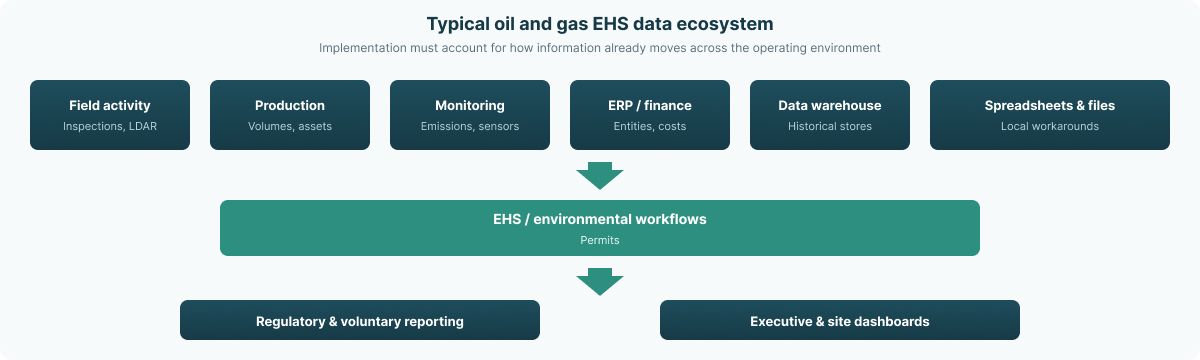
Figure 2: Inspection-to-audit workflow chain. Configuration should preserve this sequence, including maintenance handoffs and retrievable evidence.
1. Define the outcomes before configuring the software
An implementation should begin with a clear understanding of the problems the organization is trying to solve.
That sounds straightforward. Unclear requirements are still a frequently cited reason EHS software projects fail to deliver. Verdantix guidance summarized by Wolters Kluwer points to unclear requirements, misaligned business and technical teams, underestimated data migration, insufficient preparation for system complexity, configuration creep, and weak long-term governance as recurring risks.
A feature-first implementation often begins with a list of modules: inspections, incident management, permit tracking, corrective actions, emissions reporting. An outcome-focused implementation begins with the operational or compliance problem:
- Environmental teams spend too much time consolidating information for reporting.
- Facility teams cannot consistently track permit obligations and deadlines.
- Corrective actions are assigned but not reliably closed.
- Field inspection records are difficult to connect with supporting documentation.
- Environmental and safety information is stored across disconnected systems.
- Management lacks consistent visibility across sites.
The distinction matters because a module can be technically deployed without improving the underlying process. Buyers comparing platforms for those outcomes should also review environmental compliance software features once the target workflow is clear.
Before configuration begins, the implementation team should be able to answer:
- Which process is being improved?
- Who owns that process today?
- Which users participate in it?
- What information is required?
- Where does that information currently originate?
- Which approvals or controls apply?
- What would indicate that the process has improved?
- What is outside the first implementation phase?
These questions create boundaries around the project and give the organization a basis for evaluating design decisions later. They also become the spine of the implementation roadmap: what is in phase one, what is deferred, and what success looks like.
Define measurable success
Implementation objectives should be specific enough to measure. Depending on the workflow, useful measures could include inspection completion rates, overdue compliance obligations, corrective-action closure times, time required to prepare a regulatory submission, missing or rejected records, continued spreadsheet work outside the platform, unresolved data-quality issues, or user participation by role or location.
Not every metric applies to every implementation. The right measures should come directly from the original business objective. Logins and configured module counts are not enough.
Operational example: Permit deadline visibility
Scenario: A refining environmental team wants fewer missed permit milestones across several units.
Challenge: The first instinct is to buy a permit module and migrate every historical permit PDF.
Better outcome framing: Reduce overdue obligations for a defined permit class, with clear owners, reminder logic, and evidence attached to each milestone. Historical archives can remain outside the first phase if they are not required for day-to-day tracking.
2. Document the current workflow before designing the new one
Software implementation creates an opportunity to improve how work is performed. It also creates a risk that an inefficient or inconsistent process will simply be reproduced in a new system.
Before designing the future workflow, document what happens today: what triggers the work, who completes it, where information is entered, which systems or spreadsheets are used, who reviews or approves the record, how follow-up actions are assigned, how supporting evidence is retained, which reports or filings depend on the information, and where delays or repeated manual work occur.
Include both the documented procedure and the way work actually happens in the field.
An inspection procedure may look straightforward on paper: complete the inspection, record the findings, assign corrective actions, close the inspection. In practice, it may also involve photographs, offline data entry, supervisor review, email notifications, maintenance coordination, permit documentation, and evidence retained for a future audit. Understanding that chain is necessary before configuration. Industry recommended practices reinforce the same point: inspection and process-safety programs exist to protect integrity and performance, not merely to populate records. API Recommended Practice 754, for example, frames process-safety indicators as tools for driving improvement across leading and lagging measures, which only works if underlying events, responses, and system health are captured consistently.
OSHA's Process Safety Management standard reinforces why documented procedures are not enough on their own. Covered employers must train employees on operating procedures and hazards, consult employees on process hazard analyses and other PSM elements, and manage changes that affect processes. Those expectations create workflow and evidence requirements that an EHS deployment has to respect when process-safety-adjacent work, including incident reporting and related EHS program workflows, is in scope.
Avoid designing in isolation
Environmental, safety, operations, and IT teams often view the same workflow differently. An environmental manager may focus on regulatory evidence. A field user may focus on time and connectivity. An IT team may focus on integration and data ownership. A corporate leader may focus on consistency across sites.
OSHA's worker participation guidance emphasizes that employees should be involved in operating and improving workplace safety and health programs. Software that is difficult to use at the site level can weaken that participation, regardless of how polished its executive dashboards appear. The implementation process should account for each perspective. Otherwise, the organization risks deploying a technically functional workflow that fails under real operating conditions.
Operational example: LDAR route vs. office review
Scenario: Field technicians complete LDAR surveys on tablets. Corporate environmental analysts later reconcile findings against repair status and reporting thresholds.
Challenge: If design sessions include only corporate analysts, forms become too long for a cold morning on a well pad, and offline autosave is treated as optional.
Implementation implication: Document field time, connectivity limits, and office reconciliation as one workflow before configuration starts.
3. Inventory the systems and data that support the process
EHS information rarely originates in one place.
Depending on the workflow, required information may be stored in existing environmental or safety systems, enterprise resource planning platforms, production data systems, emissions monitoring technologies, data warehouses, document repositories, business intelligence tools, local spreadsheets and shared drives, or field forms and mobile applications. Operators may also have SCADA, maintenance, GIS, laboratory, or other operational systems in the environment. Those should be inventoried as part of the operating landscape, but that does not mean every system must be connected in the first phase.
Typical oil and gas EHS data ecosystem from field and source systems through workflows to reporting
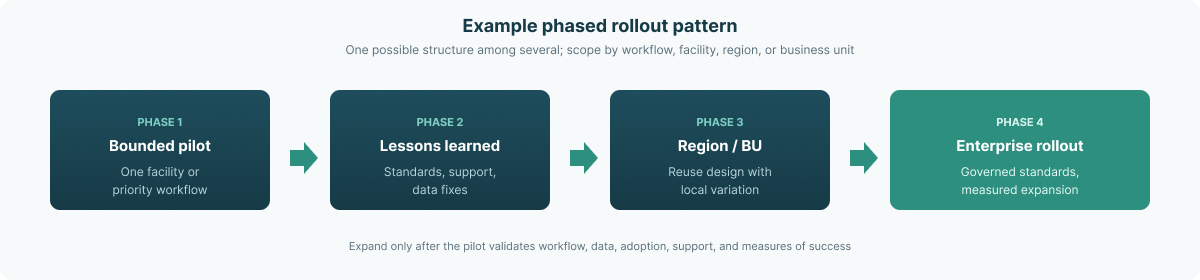
Figure 3: Typical EHS data ecosystem. The implementation inventory should identify authoritative sources before deciding what to migrate, integrate, or leave outside the first phase.
Validere, for example, publicly supports integration categories that include data warehouses, emissions monitoring systems, production data systems, ERP platforms, and business intelligence tools. For reporting-led first phases, see the Emissions Management Software Buyer's Guide and regulatory air and GHG reporting.
The objective of the inventory is not to connect every system during the first phase. It is to understand the role each system plays.
| Area | Questions to answer |
| Ownership | Which team or system owns the information? |
| Purpose | Why is the data collected and how is it used? |
| Format | How is the information structured? |
| Frequency | How often is it created or updated? |
| Quality | Is it complete, consistent, and current? |
| Transfer | How does it move between systems today? |
| Controls | Who can change or approve it? |
| Retention | How long must it be retained? |
| Reporting | Which reports or decisions depend on it? |
This assessment helps distinguish between authoritative source systems and information that is being duplicated only because the current workflow is fragmented.
Integration is not the same as governance
Moving data automatically between systems can reduce manual entry, but it does not make the data reliable on its own.
The implementation team still needs to define which system is authoritative, how records are matched, which identifiers are used, how validation occurs, what happens when data is missing, who resolves discrepancies, and how changes are tracked. Without those decisions, integration can move inconsistent information faster without resolving the underlying issue. Platform architecture questions matter here as much as connector lists.
Data governance flow from authoritative system through validation, workflow, reporting, and audit
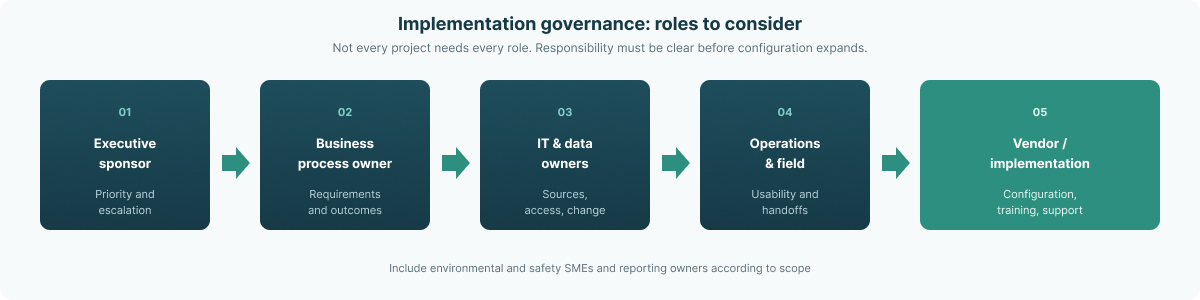
Figure 4: Data governance flow. Authoritative source, integration, and validation should be decided before the workflow depends on automated transfers.
Operational example: Subpart W data chain
Scenario: An upstream operator is preparing a Subpart W inventory. Under EPA Subpart W, covered facilities must collect data, calculate emissions, follow quality-assurance and missing-data procedures, retain records, and report results.
Challenge: Production volumes, equipment inventories, leak surveys, and repair records each originate in different systems. Spreadsheets become the temporary integration layer.
Implementation implication: Inventory which system is authoritative for each input before automating transfers. Connecting everything without ownership rules only accelerates inconsistency.
4. Establish implementation governance and ownership
An EHS software implementation should have clear business and technical ownership before configuration expands. In practice, enterprise deployments almost always depend on three ownership layers working together: executive sponsorship, business process ownership, and technical ownership. Successful implementations typically have an executive sponsor who can resolve cross-functional priorities and maintain momentum when implementation decisions span environmental, operations, and IT teams. Without that sponsorship, configuration debates tend to stall or multiply.
Weak long-term governance is one of the risks identified in recent EHS software implementation guidance, alongside unclear requirements, misaligned teams, migration complexity, and configuration creep. Broader risk-management frameworks such as ISO 31000 emphasize structured processes for identifying, assessing, and treating risk. ISO 45001 and ISO 14001 similarly assume defined roles, documented processes, and continual improvement. Oil and gas operators also often align with IOGP operating management system guidance, which treats risk control as a lifecycle management-system problem across construction through decommissioning.
Implementation governance roles from executive sponsor through vendor partner
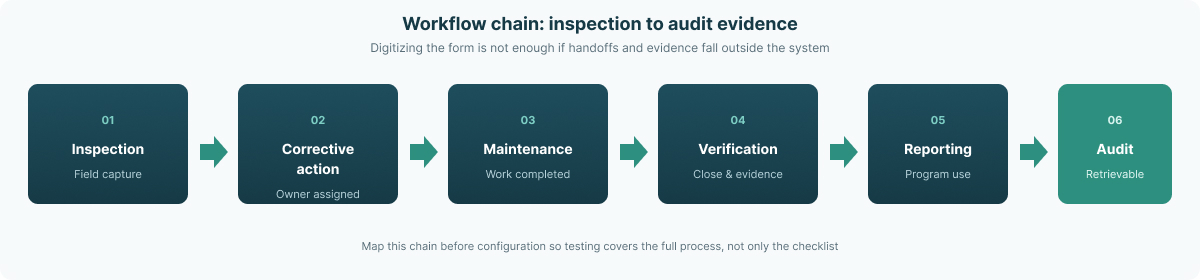
Figure 5: Governance roles to consider. Start with executive sponsorship, then confirm business and technical ownership before configuration expands.
The governance structure will vary with project size and scope. Roles to consider include an executive sponsor, business process owner, environmental and safety subject-matter experts, operations or field representatives, IT and data owners, regulatory reporting owners, and an implementation partner or software provider. Not every project needs every role. The important point is whether responsibility is clear.
The implementation team should establish who approves workflow requirements, who owns each source of data, who makes decisions when requirements conflict, who approves configuration changes, who determines whether a workflow is ready to launch, who owns support after go-live, and how future regulatory or operational changes will be managed.
When capability tradeoffs surface during those debates, see environmental compliance software features. Organizations that need help documenting requirements, migration scope, or change control should evaluate professional services and advisory support as part of the implementation plan, not as an afterthought.
Control configuration growth
Configurable software is valuable because it can reflect an organization's processes. It can also create risk when every preference becomes a custom requirement.
NIST SP 800-53 configuration-management controls describe the discipline enterprises already apply to information systems: propose, review, test, approve, and document changes rather than allowing uncontrolled drift. EHS platforms deserve the same discipline. Before approving a configuration change, ask whether the requirement is regulatory, operational, or simply a preference; whether it applies across the organization or only to one user group; whether a standard workflow would work; who will own the configuration after implementation; and how the change will affect reporting, integrations, and other sites.
The goal is not to avoid configuration. It is to make configuration intentional and governed.
Operational example: Competing site preferences
Scenario: Two gathering systems want different required fields on the same inspection form.
Challenge: Without a change-control owner, both versions ship, reporting breaks, and corporate cannot compare completion rates.
Implementation implication: Decide which fields are enterprise-required, which can vary by asset type, and who can approve exceptions before the pilot expands.
5. Prepare data before migration
Data migration is often treated as a technical task that occurs after the software has been configured. It should be considered much earlier.
Underestimating migration requirements is a recognized implementation risk because historical information may be inconsistent, incomplete, duplicated, or structured differently across systems and sites. The cost of leaving data quality unresolved is not abstract. Gartner research has estimated that poor data quality costs organizations an average of $12.9 million per year, and that many organizations still do not measure data quality systematically. IBM Institute for Business Value findings similarly show data quality as a top operations priority, with a substantial share of organizations estimating multimillion-dollar annual losses. Frameworks such as the DAMA Data Management Body of Knowledge treat data governance, data quality, and metadata as managed disciplines with clear ownership. That is the same discipline an EHS migration needs when facility identifiers, permits, and reporting inputs must remain trustworthy after go-live.
Before migrating data, determine:
- which records are required for ongoing operations
- which records must be retained for regulatory or audit purposes
- which historical information is useful for analysis
- whether duplicate or obsolete records should be removed
- which terms and identifiers need to be reconciled
- whether units and formats are consistent
- who will validate migrated information
- how migration errors will be corrected
Depending on the workflow, oil and gas operators may need to reconcile facility names, asset or equipment identifiers, permit records, inspection histories, incident and corrective-action records, emissions-related inputs, production data used in environmental calculations, or reporting entities. Voluntary inventories that follow the GHG Protocol add another reason to keep organizational boundaries and activity data consistent.
Preparation should match workflow scope. A limited inspection deployment may need less data work than an enterprise environmental reporting implementation. Treat readiness as an explicit workstream. Validere AI and data strategy and advisory services are examples of packaging that work separately from feature configuration.
Do not migrate data simply because it exists
Moving every available historical record can increase cost and complexity without improving the future process. Evaluate historical data by operational, analytical, regulatory, and audit value. In some cases, older records may remain in an archive while only active or relevant information is migrated. Make that decision with compliance, legal, records-management, and business owners.
Operational example: Facility naming across acquisitions
Scenario: A midstream company has grown through acquisition. The same compressor station appears under three names across production, EHS, and ERP systems.
Challenge: Migrating all three naming conventions into the new platform recreates the reconciliation problem inside the new system.
Implementation implication: Reconcile identifiers for the first-phase asset set before migration. Defer enterprise-wide hierarchy cleanup if it is not required for the pilot workflow.
6. Choose a clearly bounded first phase
A phased implementation can reduce complexity and give the organization an opportunity to test requirements, governance, training, and support before expanding. A bounded first phase is one practical way to prove operating-model and adoption assumptions before an enterprise rollout. That first phase should appear explicitly on the implementation roadmap, with owners, acceptance criteria, and a decision point for expansion.
The first phase can be organized in several ways: one workflow across multiple sites, several related workflows at one facility, one operating region, one business unit, one reporting program, or one group of representative users. There is no single rollout structure that is correct for every oil and gas operator.
Example phased EHS software rollout from pilot facility to enterprise
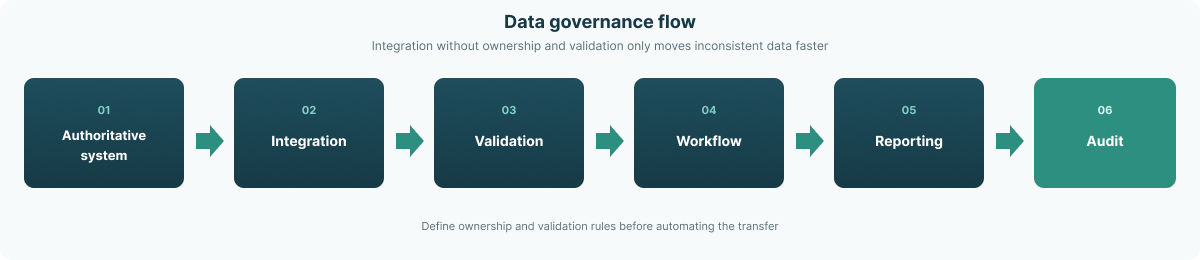
Figure 6: Example phased rollout. Facility-by-facility expansion is one option, not a universal rule. Scope by workflow, region, or business unit when that better matches process consistency and resource availability.
The appropriate scope depends on the business objective, compliance importance, process consistency across sites, data readiness, integration complexity, availability of process owners, number and type of users, ability to measure the outcome, and potential to reuse the design in later phases. If internal capacity is limited, advisory and technical consulting can help keep the pilot scoped and measurable.
Select the first workflow based on readiness and value
It may be tempting to begin with the most visible or technically ambitious process. A more useful approach is to evaluate candidate workflows against practical criteria.
| Criteria | Questions to consider |
| Importance | Does the workflow address a meaningful operational or compliance need? |
| Ownership | Is there a clear business owner? |
| Definition | Can the current process and desired outcome be documented |
| Data readiness | Is the required information available and sufficiently reliable? |
| Complexity | Can the workflow be implemented without introducing too many dependencies at once? |
| User access | Can representative users participate in design and testing |
| Measurement | Can the team determine wether the workflow has improved? |
| Reusability | Can the design inform later phases or sites? |
Possible starting points might include inspections, permit tracking, corrective actions, incident reporting, LDAR, or a defined environmental reporting workflow. These are examples, not a universal sequence. The best starting point depends on the operator's priorities and readiness. Operators with Canadian assets should also factor in evolving methane expectations under Canada's enhanced oil and gas methane regulations when choosing emissions-related first phases.
Operational example: One region, one inspection program
Scenario: A midstream operator wants enterprise EHS software but has uneven data readiness across basins.
Challenge: An all-regions launch stalls when one basin still relies on paper and another already uses a mobile tool.
Implementation implication: Pilot the inspection program in the basin with clear ownership and measurable completion rates, then reuse the configuration standards elsewhere.
7. Configure and test the complete workflow
Testing should cover the full operational process, not only whether individual software functions work. For field-heavy programs, that includes mobile field data capture under realistic conditions, not only office Wi-Fi demos.
For an inspection workflow, end-to-end testing may include task scheduling, assignment to a field user, mobile or offline completion, required-field validation, attachment of photographs or supporting documents, identification of a finding, creation of a corrective action, review and approval, escalation of overdue work, reporting, and record retention.
Validere's mobile capabilities, for example, support offline field activities across workflows such as LDAR, incident reporting, inspections, permit tracking, engine testing, and corrective actions. That makes field testing especially relevant where connectivity cannot be assumed.
Test real operating conditions
Testing should involve representative users and realistic scenarios. That may include weak or unavailable connectivity, incomplete records, incorrect values, duplicate submissions, reassigned tasks, rejected approvals, overdue actions, integration failures, changes to facility or asset information, and users with different permissions.
A workflow that succeeds only under ideal conditions is not ready for broader deployment.
Define acceptance criteria
Before testing begins, establish what must be true for the workflow to launch: required steps function as designed, permissions are correct, reports contain the intended information, integrations transfer and validate data correctly, field users can complete the process under expected conditions, support procedures are documented, and known issues have owners and resolution plans.
Operational example: Offline inspection failure mode
Scenario: A field tester completes an inspection underground or in a remote pad with no signal, attaches photos, and syncs later.
Challenge: Lab testing on corporate Wi-Fi never reveals that required fields block offline completion or that photo attachments fail on sync.
Implementation implication: Include low-connectivity scenarios in acceptance criteria before calling the workflow ready for rollout.
8. Prepare users for the process, not just the platform
User adoption is often discussed as a training issue. Training matters, but adoption also depends on whether the redesigned workflow is understandable, practical, and supported. Change management belongs in the plan before go-live, not after.
Role-specific preparation should explain what is changing, why, which steps each role owns, why particular information is required, how records move between field and office teams, how exceptions are handled, where users get support, and how feedback will be collected.
A field technician does not need the same training as an environmental manager, system administrator, or executive sponsor. Each user group should understand the part of the process it owns. Where process-safety-adjacent procedures are involved, OSHA's emphasis on documented training and employee understanding is a useful reminder that "completed training" is not the same as demonstrated competence.
Involve users before launch
Representative users should participate before the final workflow is approved. Their input can identify problems that are difficult to see in a conference-room design session, including forms that are too long, fields that are unclear, unnecessary duplicate entry, notifications that create noise, approval sequences that do not reflect actual responsibility, and workflows that are difficult to complete in the field.
User feedback should not override regulatory or governance requirements, but it should inform how those requirements are implemented.
Operational example: Corrective-action ownership
Scenario: A finding is assigned to "operations," but no named role owns closure.
Challenge: Training shows how to click "assign," yet overdue actions accumulate because accountability was never redesigned.
Implementation implication: Teach the new ownership model, not only the screen path. Adoption fails when the process is still ambiguous.
9. Plan the rollout and support model
A successful pilot does not automatically become a successful enterprise rollout. Before expanding, document what changed in requirements, which data issues emerged, which support questions were common, which steps users found difficult, whether integrations performed as expected, whether governance decisions were clear, whether the original measures improved, and which parts of the configuration can be reused.
The organization can then expand by workflow, facility, region, business unit, or user population.
Preserve necessary consistency
Multi-site operations need a balance between enterprise standards and local requirements. Some elements should remain consistent: core definitions, required regulatory fields, approval controls, reporting structures, data ownership, and audit history. Other elements may vary by jurisdiction, asset type, or operating process. Decide where variation is justified rather than allowing each location to redesign the workflow independently. That balance is also central to multi-site EHS management.
Operational example: Expanding after a successful pilot
Scenario: Facility A closes corrective actions faster after the pilot and support tickets are manageable.
Challenge: Leadership wants an immediate enterprise cutover. Sister facilities still use different permit numbering and asset IDs.
Implementation implication: Expand to the next region only after migration rules and support capacity are documented. Speed without reuse standards recreates local shadow systems.
10. Measure performance after go-live
Go-live is the beginning of operational ownership, not the end of implementation. After launch, monitor whether the workflow is producing the intended result.
Process performance. Completed and overdue tasks, inspection completion, corrective-action closure, approval time, permit milestones, reporting preparation effort, and unresolved exceptions.
Data quality. Missing required fields, duplicate records, rejected submissions, failed validations, unresolved reconciliation issues, and integration errors.
Adoption. Active users by role, completion through the intended workflow, mobile or offline use, support requests, work still completed outside the platform, and user feedback.
Governance. Configuration requests, regulatory changes, unresolved ownership questions, new integration dependencies, recurring support issues, and upcoming expansions.
Metrics should connect to the original objective. High login activity does not mean the process improved. When the objective is reporting preparation effort, evaluate against the same criteria used in the emissions management software buying discussion: source readiness, exception handling, evidence, and submission workflow.
Operational example: Reporting preparation effort
Scenario: The original outcome was fewer hours consolidating environmental inputs before a filing deadline.
Challenge: Dashboards show high login counts, but the team still rebuilds the submission in spreadsheets each quarter.
Implementation implication: Track preparation effort and spreadsheet workarounds explicitly. Otherwise the deployment looks successful while the operating model is unchanged.
Implementation stages at a glance
| Implementation stage | Key question | Common mistake |
| Outcomes | What problem are we solving, and how will we know it improved? | Starting with modules instead of process outcomes |
| Workflows | How does work happen today in the field and office? | Mapping only the documented procedure |
| Systems and data | Where is authoritative data, and what must connect first? | Migrating or integrating everything at once |
| Governance | Who owns requirements, data, and configuration changes? | Undefined ownership until conflicts appear |
| First phase | What scope is ready enough to prove the operating model? | Choosing the most ambitious workflow first |
| Testing | Has the end-to-end workflow been validated with real users? | Testing features instead of the full process |
| Adoption | Do users understand the redesigned process, not only the screens? | Treating training as a one-time launch event |
| Rollout | Is the design reusable enough to expand intentionally? | Scaling before standards and support are proven |
| Measurement | Are we tracking workflow performance after go-live? | Celebrating logins and configured modules |
Common EHS software implementation mistakes
Many implementation problems begin before configuration is complete.
Recent EHS software implementation guidance identifies several recurring risks, including unclear requirements, misaligned business and technical teams, underestimated migration effort, insufficient preparation for system complexity, configuration creep, and weak long-term governance. This aligns with broader enterprise transformation research suggesting that technology alone is rarely the primary cause of unsuccessful implementations.
1. Beginning without a defined outcome
A broad objective such as “digitize EHS” does not give the team enough direction to prioritize requirements or measure success. Define the process, owner, users, information, and expected result.
2. Treating implementation as only an IT project
IT involvement is essential, but the software will support business, regulatory, and field processes. Environmental, safety, compliance, and operations teams need to participate in design and governance.
3. Underestimating data migration
Historical records may contain inconsistent terminology, duplicate information, missing values, and unclear ownership. Assess migration requirements before they create late-project delays.
4. Allowing scope to grow without control
New requirements will emerge. The organization needs a method for evaluating, approving, deferring, or rejecting them based on business value, risk, and impact on the broader design.
5. Digitizing the current process without examining it
Turning an inefficient spreadsheet or paper form into a digital form does not necessarily improve the workflow. Examine reviews, handoffs, corrective actions, evidence, and reporting.
6. Testing only with the project team
Project teams usually understand the intended workflow better than first-time users. Representative field, office, and administrative users should participate in testing.
7. Focusing on launch instead of long-term ownership
Without defined support, governance, and change control, the platform can become increasingly inconsistent after go-live. Establish ownership before launch.
Should you replace existing systems or connect them?
An EHS implementation does not always require replacing every system that already supports environmental, safety, operational, or reporting processes.
Replacement may be appropriate when the existing system no longer supports the required workflow, creates substantial manual work, cannot provide adequate governance or audit history, is difficult to maintain, requires extensive workarounds, or no longer aligns with future requirements.
Integration may be appropriate when replacing the source system would disrupt broader operations, the system still performs its primary function effectively, EHS workflows need access to data already managed elsewhere, or the organization wants to modernize selected processes without recreating established capabilities.
Validere's public integration framework reflects this connected approach across data warehouses, emissions monitoring, production data, ERP systems, and business intelligence tools. See also environmental compliance and air and GHG reporting.
Neither replacement nor integration is inherently better in every situation. Decide system by system.
Operational example: Keep production as the source of truth
Scenario: Environmental calculations depend on production volumes already governed in a production accounting system.
Challenge: Recreating production data entry inside the EHS platform introduces dual maintenance and conflicting totals.
Implementation implication: Integrate the authoritative production feed, then govern validation and exceptions in the environmental workflow.
What to evaluate in an implementation partner
The software is only one part of the implementation. Evaluate whether the vendor or partner can move the organization from requirements to a stable operating process: relevant environmental, safety, emissions, and compliance experience; documented requirements and design decisions; data migration and integration capability; field and office support; clear roles and change control; training and post-launch support; ability to support later phases without unnecessary complexity; and transparency about assumptions, dependencies, and exclusions.
During evaluation, ask:
- How will requirements be documented and approved?
- Who is responsible for data preparation?
- How are changes to scope managed?
- What must the customer provide?
- How will representative users participate?
- What testing and acceptance criteria are used?
- What support is available after launch?
- How are future workflow or regulatory changes handled?
- Which costs are not included in the initial scope?
These questions reveal whether the implementation approach is as mature as the platform. For Validere-specific support, see advisory and technical consulting.
How Validere supports EHS implementation across oil and gas
Validere helps energy companies manage connected environmental, compliance, emissions, and field workflows within a configurable platform built for asset-intensive operations.
Supported use cases include environmental inspections, permit management, incident reporting and health and safety, corrective actions, LDAR, management of change, engine and stack testing, mobile field data collection, air, water, and waste permitting, and regulatory air and GHG reporting.
Validere can also connect with data warehouses, emissions monitoring, production, ERP, and business intelligence environments, so teams can modernize EHS workflows without automatically replacing every system they already rely on. Professional services support data strategy, emissions consulting, workshops, training, and integration.
The goal is not to deploy the largest possible feature set at once. It is to establish reliable processes that connect field activity, environmental and safety information, governance, and reporting.
See how Validere supports EHS workflows for energy operations →
Frequently asked questions
How long does an EHS software implementation take?
Implementation timelines vary according to the number of workflows, sites, users, integrations, migration requirements, and configuration decisions involved.
A focused first phase can generally be planned with fewer dependencies than a broad enterprise deployment, but organizations should ask vendors to document assumptions, responsibilities, testing requirements, and acceptance criteria before committing to a schedule.
Who should be involved in the implementation?
Depending on scope, the implementation team may include environmental and safety leaders, business process owners, field or operations representatives, IT and data owners, regulatory reporting owners, an executive sponsor, and vendor or implementation specialists.
The team should be large enough to represent the process without making routine decisions unnecessarily difficult.
What should an organization implement first?
Begin with a clearly bounded workflow or operating scope where the objective, owner, users, data requirements, and measures of success can be defined.
The appropriate starting point may be an inspection process, permit program, incident workflow, corrective-action process, LDAR program, or environmental reporting requirement. The choice should depend on organizational priorities, compliance importance, data readiness, and implementation complexity.
How much historical data should you migrate?
Only what is required for ongoing operations, regulatory retention, analysis, or audit support.
Migrating every available historical record can add cost and complexity without improving the future process. Organizations may choose to migrate active and relevant information while retaining older records in an accessible archive. Retention and migration decisions should involve the appropriate compliance, legal, records-management, and business owners.
How should multi-site operators roll out EHS software?
A phased rollout can be organized by workflow, facility, region, business unit, or user group. The best approach depends on how consistent the underlying processes are, how implementation resources are distributed, and whether the first phase can establish reusable standards for later deployment.
How should implementation success be measured?
Measure the performance of the workflow the software was intended to improve. Relevant measures may include completion and closure rates, reporting preparation effort, data-quality issues, overdue obligations, use of manual processes outside the platform, adoption by the intended users, and unresolved support or governance issues.
Login activity and configured module counts should not be the only measures of success.
Build the process before scaling the platform
The most successful implementations do not begin with software. They begin with agreement on how work should happen, how information should move through the organization, and how success will be measured. Software supports that operating model; it does not define it.
For oil and gas operators, that often means connecting field activity with environmental, safety, emissions, compliance, and operational information across distributed assets and teams. A clearly scoped first phase can create the foundation for broader adoption. The implementation should expand only after the organization has validated the workflow, data, user experience, support model, and measures of success.
Planning an EHS implementation?
Every implementation starts with different systems, reporting obligations, and operational workflows. See how Validere helps industrial organizations connect EHS, environmental compliance, air and GHG, workflows with the systems teams already use, supported by advisory support when the scope requires it.
The result should not simply be a new place to enter information. It should be a more reliable way to manage the processes and evidence that support safe, compliant, and efficient operations.
Request a demo to evaluate Validere against your current EHS workflow →