An oil and gas operator is preparing its annual emissions inventory. The Title V permit is up to date, and last year's workbook is ready to use. But neither guarantees that the emissions reported this year will be accurate.
Consider a facility where annual fuel consumption has already been used to demonstrate compliance with a permit restriction. The team needs to determine whether that calculation can also be used for the emissions inventory, or whether a different calculation is required.
What a Title V permit provides, and what an emissions inventory requires
A Title V permit establishes the operating requirements for a facility, including which emission units are covered, applicable restrictions, and the monitoring and recordkeeping needed to demonstrate compliance. It may also specify how certain emissions must be calculated to demonstrate that those requirements have been met.
An emissions inventory serves a different purpose. Rather than establishing what a facility is permitted to emit, it documents emissions for a specific reporting period. Preparing that inventory requires operating data, such as fuel consumption, equipment runtime, and throughput, along with the calculation methods required by the applicable reporting program.
The distinction matters because a calculation used to demonstrate compliance with a permit may not meet the requirements of the emissions inventory, even when both rely on the same operating records. For the permitting framework, see EPA's Title V operating permits page.
Where permit data and inventory calculations diverge
When a team compares the permit's emission-unit list with the inventory's source list, they may find differences. A source might appear on one list but not the other. That does not necessarily mean either list is wrong, because the permit and the inventory may have different reporting scopes.
Before making changes, the team needs to determine whether the difference reflects outdated records, a missing source, or a legitimate difference in reporting requirements. The lists should not be made identical without first determining why they differ. The permit copy used by the team may be outdated, because equipment changed and that copy was never updated. Whether that change also required a permit revision is a separate question. The inventory list may instead be last year's sources, carried forward and never compared with the permit versions that applied during the reporting period. The lists can also name different things, because an inventory may require a source or a pollutant the permit does not treat as an emission unit, and a permit may include a unit this inventory does not ask for.
To understand the difference, the team needs to review the applicable permit versions and the inventory requirements. Forcing the lists to match can drop a source the inventory requires, or add one it is not asking for. The important question is whether the source and pollutant belong in the inventory under the applicable reporting requirements.
The next question is how to calculate the emissions that must be reported. Earlier in the year, the same fuel was used to test a restriction in the permit. A permit may limit how much fuel a source can burn, or how much pollution it can emit. If the restriction is a fuel cap, the compliance result may be a quantity of fuel rather than an emissions figure. If the restriction is a ceiling on emissions from burning that fuel, the compliance result is an emissions calculation made with the method the permit requires. If the compliance calculation is already documented, the person preparing the inventory may be tempted to reuse it without checking whether it represents the emissions the inventory requires.
Potential to emit is another figure that may turn up in the permit file. It describes the most a source could emit under its design, once the enforceable limits that qualify are taken into account. That is not the same as the emissions from the fuel burned during the reporting year, and a restriction written into the permit does not automatically lower it.
The same fuel record can support the compliance calculation and the inventory calculation. The two calculations do not have to use different methods or produce different numbers. A separate inventory calculation is unnecessary when the compliance calculation already meets the inventory's requirements.
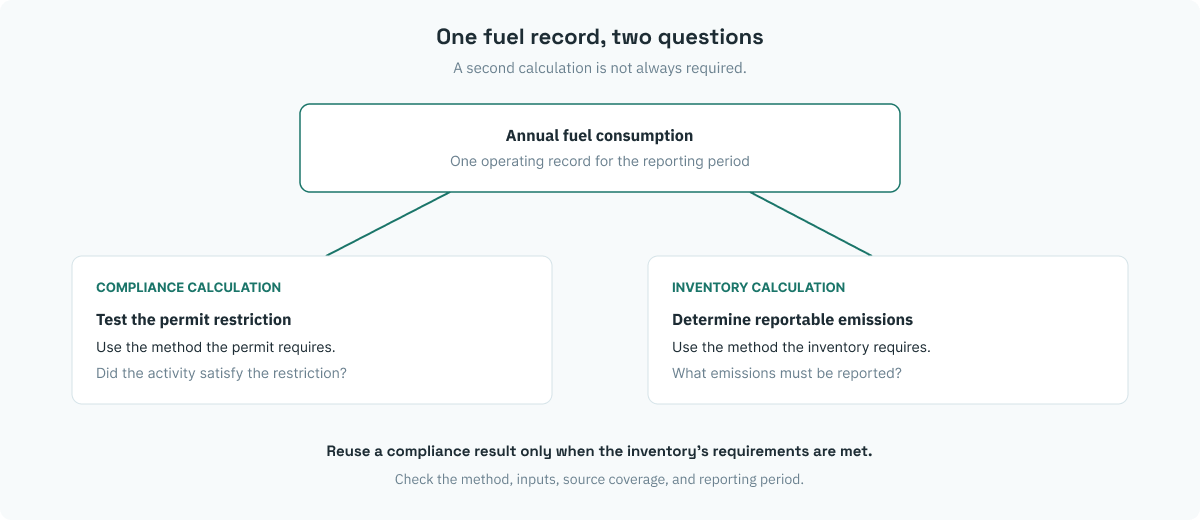
Figure 1. The same fuel record can feed both calculations. A second calculation is not always required.
Before reusing a compliance calculation, the team needs to confirm that its method, inputs, source coverage, and reporting period meet the inventory's requirements. Even when two calculations produce the same result, that alone does not establish that the compliance calculation is appropriate for inventory reporting.
If the year's fuel use or operating hours are missing from the records, the permit will not supply them. What may be used when an input is blank, late, or only an estimate is covered in missing data in air and GHG reporting. A federal greenhouse gas report is a different filing, and a permit limit is not that report's total. How that federal report works is covered in the EPA GHGRP reporting guide.
When teams reuse a previous year's workbook, they may overlook permit changes that affect the current reporting period. Check the permit versions that applied during the reporting period for a change that affects source coverage, the calculation, or the records. Last year's accepted inventory will not show whether that check was made.
Some agencies title the annual submission a Title V inventory because the facilities that file it hold Title V permits. That name belongs to the agency. It does not mean the permit limit is what gets reported, and Title V is not, by itself, one national inventory form. The annual compliance certification is a different submission. It tells the permitting authority whether the source met the permit. Filing the certification does not file the inventory.
Keeping permit changes connected to inventory work
At some facilities, the people who keep the permit and the revision log are not the people who close the inventory. Even when the permit is properly maintained, the inventory team may be working from an outdated copy, or from only the latest revision.
Whoever closes the inventory needs the permit versions that applied during the reporting period, and needs to know whether a change affects source coverage, the calculation, or the emissions being reported. When the same operating data supports multiple reports, teams also need clear responsibility for reviewing and approving the resulting calculations. Running an in-house compliance reporting program covers that broader responsibility.
Preserving the evidence behind reported emissions
The file needs to show which permit versions were checked for the reporting period, and whether a change affected source coverage, the calculation, or the records. It needs to show how differences between the unit list and the source list were handled, including differences that were left as they were, and why. The supporting records should also show which operating data and calculation methods produced the reported emissions, including why any existing permit compliance figures were reused or excluded.
If the workbook contains only the final total and the supporting permit records are stored separately, the next reviewer may have to reconstruct those choices from other files. A limit may have been copied in, a compliance result reused, or the versions for the reporting period left unreviewed. What a verifier expects to see with a reported figure, beyond this file, is covered in emissions assurance and verification in oil and gas.
Five checks before closing the inventory
Before finalizing the inventory, the team should verify the following. A current permit and a workbook that looks complete do not answer these questions.
|
Check |
Question to answer |
|---|---|
|
Source coverage |
Does the inventory require this source and this pollutant? |
|
Activity |
Does the calculation use this reporting period's operating records, including the fuel actually burned? |
|
Method |
Does the inventory accept this calculation method? |
|
Permit version |
Were the permit versions applicable during the reporting period checked, and did any change affect source coverage, the calculation, or the records? |
|
Evidence |
Can someone else reconstruct how the reported number was produced? |
The existing workbook may be sufficient when a second person can see which permit versions were checked, how differences between the two lists were resolved, and how this period's fuel became the reported result. When those choices exist only as overwritten cells and email, the next reviewer has to reconstruct them from that trail rather than from the workbook. At that point, the workbook may no longer be sufficient to support the reporting process. When spreadsheets stop working for emissions management covers that distinction.
Depending on its capabilities, reporting software may help a team keep the records and calculations used to prepare an inventory. It does not decide which list difference is real, whether a compliance result may be reused, or who closes the inventory. Teams choosing a reporting platform for that work can use the emissions reporting software guide.
A defensible inventory lets someone trace a reported emissions figure back to the operating data and the calculation method that produced it. Validere can keep that calculation traceable to the operational activity and the methodology behind it, next to the permit file and the other systems the team already runs. For the filings this close supports, see regulatory air and GHG reporting.
Frequently asked questions
Does a Title V permit already contain the emissions inventory?
A Title V permit contains the emission units, the operating restrictions, and the records those restrictions name. It does not contain the inventory result, which still has to be calculated from this period's activity under the inventory's method. A current permit in the same folder as a finished workbook does not mean that calculation has been done.
Can a Title V permit limit or potential-to-emit figure be used as the emissions inventory result?
A permit limit or a potential-to-emit figure is not a substitute for calculated emissions. An existing compliance calculation may be reusable if its method, inputs, source coverage, and reporting period satisfy the inventory's requirements.
Why might the permit's equipment list and the inventory's source list differ?
The permit copy the team is using may be outdated, or the inventory may still be last year's sources. The two documents may also name different units or different pollutants. Whether a facility change required a permit revision is a separate question. A mismatch, by itself, is not a reason to make the lists identical.
Is a Title V compliance certification the same as the emissions inventory?
No. The certification tells the permitting authority whether the source met the permit. The inventory reports the period's emissions under the inventory's own requirements. Completing the certification does not complete the inventory.