BKV Corporation's Project VADER (Visualization and Automation of Data for Emissions Reporting) processes more than 550 operational data fields and roughly 4 million data points each month. Developed by BKV's Operations, IT, and Environmental, Health, Safety and Regulatory (EHSR) teams, the initiative prepares operational data for greenhouse gas (GHG) emissions reporting.
In its published Project VADER case study, BKV describes the six-stage methodology behind the initiative and how its teams continue to refine the process.
Building the data foundation for emissions reporting
BKV uses the EPA's Greenhouse Gas Reporting Program (GHGRP) as a baseline for defining its reporting requirements.
For each required data point, the teams identify an authoritative source to maintain consistency and traceability. They assess datasets for completeness and accuracy, address the gaps those reviews identify, and connect operational systems so the data can be consolidated automatically.
The process also uses queries developed and validated by BKV's teams to check for outliers, duplicates, and inconsistencies.
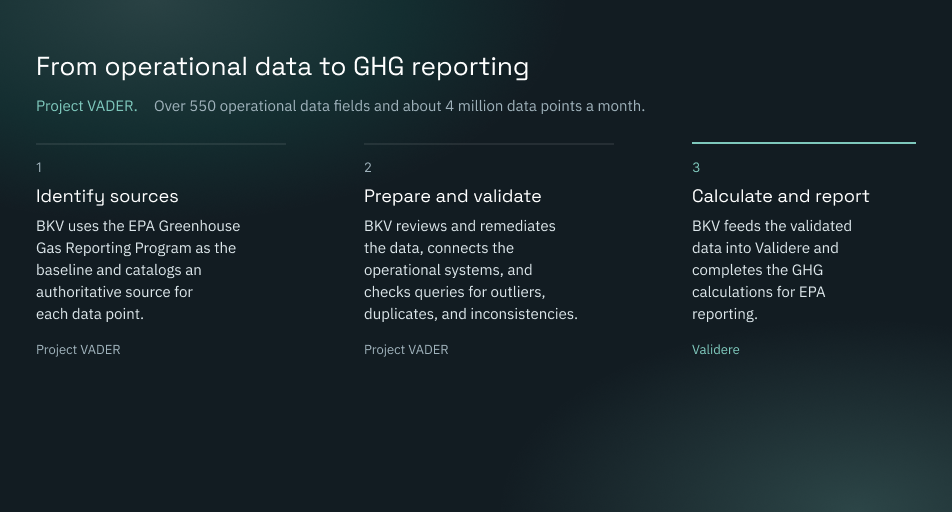
Figure 1. BKV identifies the sources and checks the data in Project VADER, then completes the GHG calculations for EPA reporting in Validere.
Where Validere fits into Project VADER
BKV feeds validated data from its queries into Validere and completes the GHG calculations there for EPA reporting.
In its case study, BKV describes Validere as its "comprehensive repository and regulatory emissions calculation and reporting platform."
Project VADER's progress and next steps
Several stages of Project VADER are already operational. What began as an emissions-reporting initiative has also evolved into a broader framework for managing environmental and operational data.
As Project VADER expands, BKV expects monthly GHG calculations to improve forecasting and budgeting accuracy against its net-zero targets. The company also expects that maintaining an authoritative source for each data point will make acquired assets easier to integrate.
Another objective is to make better use of existing operational data to quantify GHG emissions and reduce the assumptions involved in those calculations.
Congratulations to BKV's Operations, IT, and EHSR teams on the progress they've made with Project VADER. We're pleased to support their emissions reporting efforts.
Read BKV's full Project VADER case study for more detail on the initiative.
Working through an emissions reporting requirement?
Whether you're preparing for a new reporting requirement or improving an existing process, connecting operational data with the right calculations and review steps is essential. If you're evaluating how to manage that work across your facilities, talk to an expert about how Validere can support your GHG calculations and regulatory reporting.